Product Overview
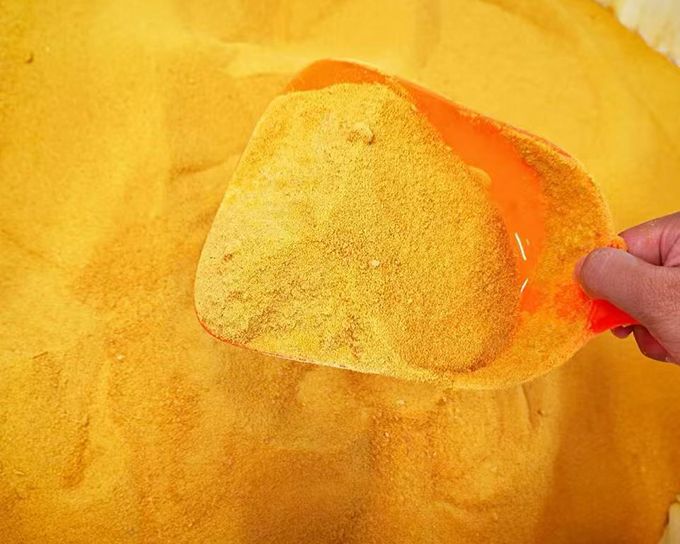
Industrial Grade Poly Aluminium Chloride (PAC) is a widely used inorganic polymer coagulant for municipal sewage treatment, industrial wastewater clarification, and general water treatment. As a cost-effective alternative to conventional aluminium salts in many applications, it helps neutralize particle charges and promotes the formation of larger flocs.
During coagulation, PAC destabilizes suspended particles and colloids. As a result, these particles can aggregate and settle more effectively, making subsequent clarification and solid-liquid separation easier. However, actual performance depends on raw water quality, product grade, dosage, pH, and operating conditions.
KolinSC offers industrial PAC grades with different aluminium oxide (Al₂O₃) contents to meet varying treatment requirements. For example, 24–28% grades may suit general wastewater applications, while selected 29–30% grades may be considered where higher Al₂O₃ content is required. Nevertheless, a higher Al₂O₃ content does not automatically guarantee lower consumption or better treatment results.
For applications requiring stricter impurity control, buyers should evaluate the relevant product specifications and regulatory requirements before selecting a suitable grade.
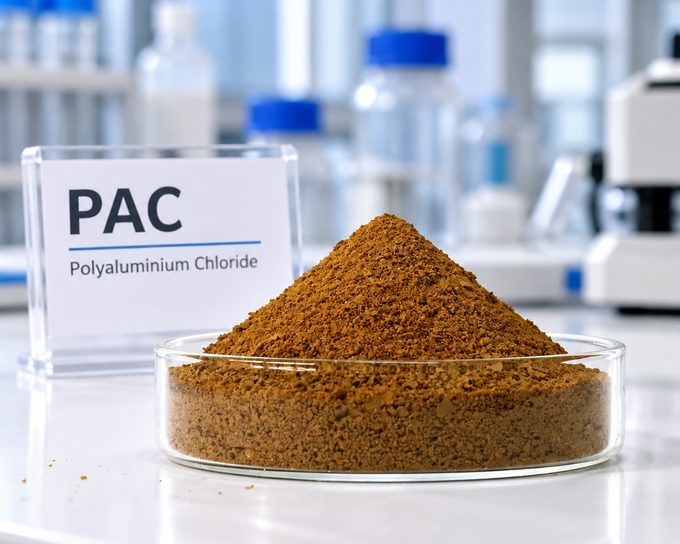
Industrial Grade Poly Aluminium Chloride (PAC) Powder
Industrial grade poly aluminium chloride (PAC) powder for municipal sewage treatment, industrial wastewater clarification and general water treatment applications. Available in different Al₂O₃ grades to meet varying treatment requirements.
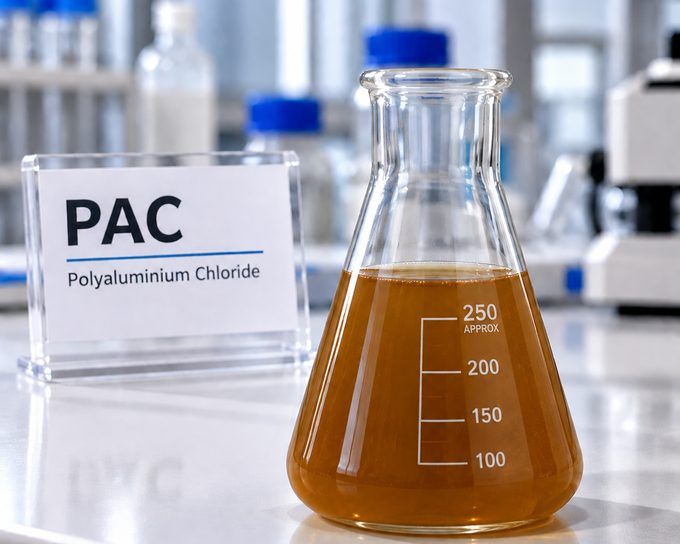
Poly Aluminium Chloride (PAC) Solution in Laboratory Flask
Laboratory display of a poly aluminium chloride (PAC) solution for water treatment evaluation. PAC performance depends on product grade, dosage, raw water characteristics, pH and operating conditions.
Key Specifications Summary
The following parameters provide an initial reference for product selection. Buyers should confirm the exact specification for their selected grade before ordering.
| Item | Specification |
|---|---|
| Appearance | Yellow / light-yellow to tan powder |
| Al₂O₃ | 【24%-28%】(multiple grades available) |
| Basicity | 40.0-90.0% |
| Water Insoluble Matter | ≤1.5% |
| Applicable pH Range | 6.0-9.0 |
For detailed product evaluation, please review the relevant Technical Data Sheet (TDS) and Safety Data Sheet (SDS). These documents support technical review, safe handling, and shipment preparation. In addition, batch-specific analytical results can be checked against the corresponding Certificate of Analysis (COA).
The figures above represent the stated product specification range. Actual batch values should be verified against the applicable COA. Third-party testing can be discussed when required.
Available Grades — Choose by Al2O3 Content
24%—26% Al2O3 — Economy Grade
Most cost-effective option. Suitable for general municipal sewage, low-turbidity industrial wastewater and projects where budget is the primary concern.
28% Al2O3 — Standard Grade
Balanced performance and price. The most widely used grade for municipal wastewater plants and general industrial effluent treatment.
29% Al2O3 — High Performance Grade
Higher alumina content means lower dosage per cubic metre. Recommended for projects with tighter discharge limits or higher raw water turbidity.
30% Al2O3 — Premium Industrial Grade
Highest alumina content in the industrial range. Minimum dosage, maximum flocculation efficiency. Suitable for demanding industrial wastewater and large-scale projects.
These categories are preliminary purchasing references rather than guarantees of performance. In practice, the best choice depends on the water composition, required effluent quality, chemical consumption, and sludge characteristics.
Not sure which PAC grade to choose? Share your available water quality data, including turbidity, suspended solids (SS), chemical oxygen demand (COD), and pH. We can help you evaluate suitable grades and arrange a dosage assessment using jar testing.
Core Advantages of KolinSC Industrial PAC
Coagulation Performance for Wastewater Treatment
PAC helps destabilize suspended particles and promotes floc formation. Consequently, it can support clarification and solid-liquid separation in suitable municipal and industrial wastewater treatment processes.
However, floc size, settling speed, and final water quality vary with the water being treated. Therefore, application testing is recommended before establishing routine operating conditions.
Multiple Grades for Different Budgets
Water treatment facilities do not all have the same chemical requirements. For this reason, KolinSC offers different PAC grades to help buyers compare specifications and purchasing costs.
Although higher Al₂O₃ content may affect the amount of product required, it should not be used as the sole basis for comparing cost. Instead, evaluate the actual dosage, treatment results, pH adjustment requirements, and sludge handling costs together.
Water Solubility and Dosing Convenience
PAC powder can be dissolved in water to prepare a dosing solution. When properly prepared, this solution can be introduced through suitable chemical dosing equipment.
For best results, add the powder gradually to water under continuous mixing. In addition, allow sufficient mixing and preparation time to minimize undissolved particles and uneven concentrations. The appropriate preparation concentration and mixing conditions should be established according to the product instructions and equipment requirements.
Application Across Different pH Conditions
PAC is used in a variety of water treatment conditions. Nevertheless, the effective pH range depends on the product grade, alkalinity, water composition, and treatment objective.
Therefore, the stated application range should be treated as an initial reference rather than a universal operating limit. A controlled jar test can help identify suitable pH conditions and dosage levels for a specific wastewater stream.
Bulk Supply and Export Coordination
For treatment plants and industrial projects, reliable supply planning is essential. KolinSC supports bulk-order enquiries and coordinates product specifications, packaging, documentation, and shipment arrangements.
In addition, buyers can confirm available grades, order quantities, and estimated lead times before placing an order. This helps align purchasing decisions with project schedules and inventory requirements.
Cost Evaluation for Large-Scale Applications
For high-volume wastewater treatment, the lowest price per tonne does not always result in the lowest treatment cost. A more useful comparison considers the chemical consumption required to achieve the same treatment objective.
Accordingly, buyers should compare the cost per cubic metre of treated water, actual dosage, and relevant downstream treatment costs. This approach provides a more practical basis for evaluating PAC grades and suppliers.
Main Application Fields
Municipal Sewage Treatment
Primary coagulation and clarification for urban sewage treatment plants. Removes suspended solids, turbidity and partial organic load.
Industrial Wastewater Treatment
General industrial effluent from chemical plants, manufacturing, food processing and light industry.
Mining & Mineral Processing
Tailing thickening, coal washing, and solid-liquid separation in mining operations.
Papermaking Wastewater
Treatment of pulp and paper mill effluent — removal of fibre residues and colloidal substances.
Textile & Dyeing
Preliminary treatment of dyeing and textile wastewater before biological processes.
Oilfield & Produced Water
Treatment of oilfield produced water and drilling wastewater.
River Water & Reservoir Clarification
Pre-treatment of surface water for industrial process water supply.
For drinking water treatment or food-contact applications, please use our drinking-water-grade White PAC or Yellow PAC instead.
Packaging & Storage
Packaging Options
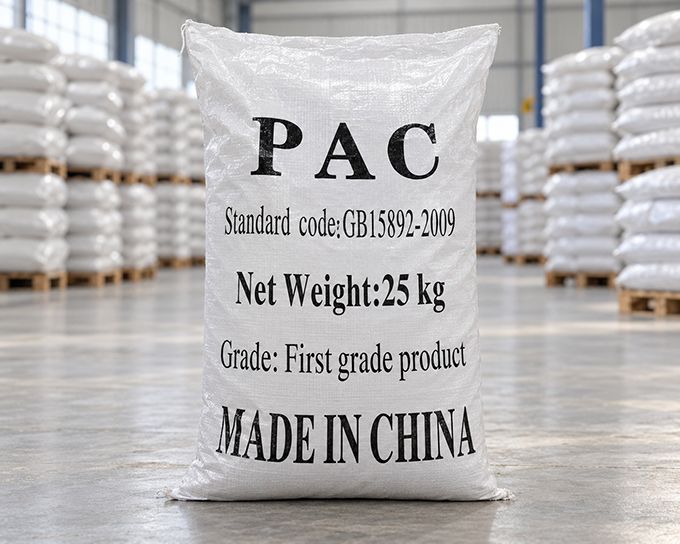
- 25 kg PP woven bag with inner PE moisture-proof liner (standard export)
- 1000 kg jumbo / IBC ton bag for large treatment plants
- Palletised and stretch-wrapped for container loading
Storage Requirements
Store in a cool, dry, ventilated warehouse. Keep bags sealed. PAC is hygroscopic and will cake if exposed to moisture. Avoid direct sunlight and incompatible chemicals.
Shelf life: 12 months in original sealed packaging.
B2B Order & Trading Information (For Global Buyers)
- MOQ: 【1 Metric Ton (1,000 kg)】
- Sample Service: 500 g – 1 kg sample available in your required grade; customer covers express freight. The sample fee can be refunded against a confirmed bulk order.
- Monthly Production Capacity: 【2000MT / month】
- Lead Time: 7 – 15 working days after deposit confirmation
- Payment Terms: T/T,XTransfer
- Export Documents Available: COA, MSDS/SDS, Certificate of Origin, Commercial Invoice, Packing List
- HS Code: 【3824909990】 (subject to destination-country customs classification)
- Main Markets: Southeast Asia, Middle East, Africa, South America, Europe
Why Choose KolinSC as Your Industrial PAC Supplier
KolinSC supplies industrial-grade Poly Aluminium Chloride (PAC), yellow PAC for applicable water treatment requirements, and high-purity white PAC for applications requiring stricter purity control. Therefore, buyers can compare different PAC grades through one supplier based on raw water conditions, treatment objectives, and product specifications.
Different wastewater treatment projects require different PAC specifications. We offer multiple aluminium oxide (Al₂O₃) content grades, including options in the 24–28% and 29–30% ranges, subject to product availability. From trial orders to full-container shipments, we work with buyers to match product specifications, packaging requirements, and order quantities. In addition, we coordinate supply arrangements according to the agreed delivery schedule.
Consistent product specifications are essential for industrial water treatment. Accordingly, relevant quality parameters may include Al₂O₃ content, basicity, water-insoluble matter, pH, and iron content, depending on the selected grade. We provide a Certificate of Analysis (COA) for product verification, allowing buyers to review key parameters before using the material in their treatment processes.
Selecting the right industrial PAC involves more than comparing prices or aluminium oxide content. Raw water quality, initial pH, alkalinity, suspended solids, and target treatment results can all influence chemical consumption. For this reason, buyers can share available water quality data and treatment objectives with our team. We can then help evaluate suitable PAC grades and discuss dosage assessment through jar testing. Ultimately, actual performance should be confirmed under the customer’s operating conditions.
FAQ
Industrial grade PAC has higher Fe content and looser heavy metal limits — it is designed for wastewater treatment and is not suitable for drinking water. Drinking water grade PAC has stricter impurity controls and is certified for potable water use. White PAC is the highest-purity grade for drinking water and food-contact applications.
24%—26% is the most economical for general wastewater. 28% is the standard balance of performance and price. 29–30% provides lower dosage and better flocculation for demanding applications. If you are unsure, start with a sample and run a jar test with your actual wastewater.
Dosage varies widely by wastewater quality. As a rough reference: municipal sewage 10 – 30 g per tonne; industrial wastewater 20 – 100 g per tonne. Always run a jar test for accurate dosing.
Yes. PAC is typically used as the primary coagulant, followed by anionic PAM as a flocculant for enhanced solid-liquid separation. This combination is standard in municipal and industrial wastewater treatment.
Dissolve in clean water with continuous stirring. Typical preparation concentration is 5 – 10%. Slowly sprinkle the powder into stirred water to avoid caking. Full dissolution takes 5 – 15 minutes.
A6: PAC is hygroscopic. We use PE-lined sealed bags and palletised container loading. As long as packaging remains intact and the container is dry, caking will not occur. Store in a dry warehouse after arrival.
12 months from production date in the original sealed bag, stored in a cool, dry warehouse.
Yes. 500 g – 1 kg samples are available in your chosen Al2O3 grade. Customer covers express freight. The sample fee can be refunded against a confirmed bulk order.
WE’RE HERE TO HELP
Looking for a reliable industrial grade PAC supplier for your wastewater treatment plant or environmental project?
Tell us your application, required Al2O3 grade, target quantity and destination port — we will reply within 12 working hours with a free sample plan and competitive factory pricing.
[ Request a Free Sample ] | [ Request Bulk Quote ] | [ WhatsApp Us ]
Professional Water Treatment Chemical Supplier & One-Stop Industrial Solution Provider