
There is no single best pH for every anionic, cationic or nonionic PAM. pH can change the particles, the polymer and any inorganic coagulant used in the same system. A weak result may therefore arise upstream of polymer addition rather than from the polymer alone.
To investigate pH and PAM flocculation, distinguish those effects and test the operating window. Assigning a fixed pH range to each ionic type misses important differences between formulations and wastewater streams.
The particles can change even when the polymer does not
Mineral and organic surfaces can gain or lose protons as pH changes. Their interaction with dissolved ions and polymer adsorption sites can change as a result. However, different particles do not all respond in the same direction or to the same extent.
A material described simply as industrial wastewater may contain several particle populations. Dissolved salts, organic substances and prior chemical additions further affect their behavior. Therefore, initial particle charge is useful information, but not a complete selection rule.
A published study of anionic PAM adsorption on coal and kaolinite illustrates why the substrate matters. Its specific system should not be used to prescribe an operating pH for unrelated wastewater.
Ionic type does not fully describe polymer chemistry
Many anionic PAM grades contain carboxylic acid or carboxylate groups whose ionization changes with pH. Their chain conformation and interactions can consequently change. Yet a more expanded chain is useful only if adsorption and bridging remain favorable.
Many cationic grades contain quaternary ammonium groups that retain positive charge across a broad range of conditions. Raising pH does not simply neutralize those groups. Nevertheless, some formulations contain other chemical structures whose stability can be affected by unfavorable pH, temperature and exposure time.
Nonionic PAM relies strongly on adsorption and bridging. It can still respond to pH indirectly because the particles and surrounding chemistry change. Amphoteric products add further structural variation rather than providing one universal pH-independent solution.
Separate immediate response from long exposure
A reversible change in ionization or conformation is not the same as irreversible chemical degradation. Short contact during flocculation and prolonged storage at an extreme pH are different questions.
If a preparation performs poorly after extended exposure, review its actual history before blaming the process pH alone. Conversely, a short trial may not establish that a formulation remains stable throughout long-term storage.
Preparation water and process water also serve different roles. The former is used to dissolve or activate the product; the latter is where the polymer interacts with solids. Record both when investigating a problem.
Check reaction pH in a combined coagulant program
Where PAC is added upstream, its aluminum chemistry can change the particles available for PAM adsorption. It may also change pH, depending on basicity, dose and water buffering.
Measure relevant pH after chemical addition rather than relying only on the untreated influent. If coagulation is inadequate, increasing PAM may not correct it. Meanwhile, excessive polymer can create additional separation difficulties.
The appropriate addition sequence and adjustment points depend on the process. A general PAC-then-PAM arrangement is a useful trial starting point in some systems, not a rule for every wastewater or sludge.
Build controls that distinguish the effects
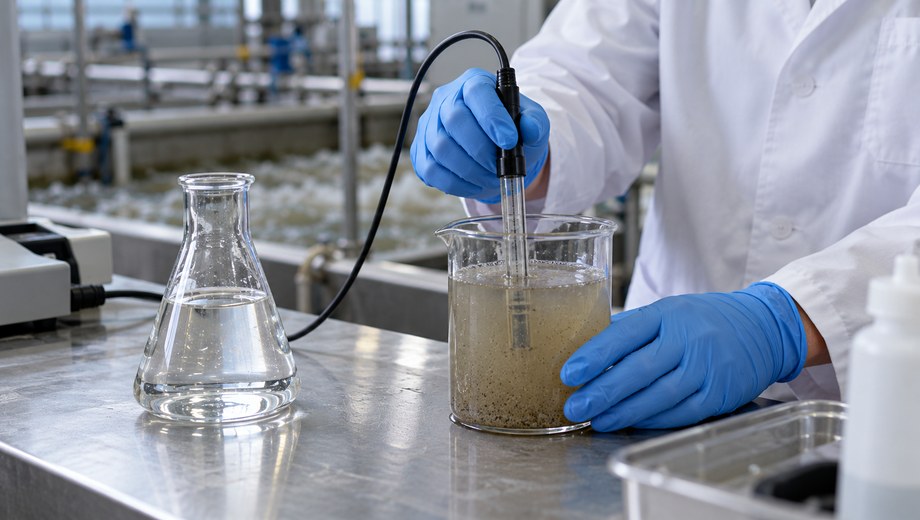
Start with representative water or sludge and a clear treatment endpoint. Record pH, temperature, solids and relevant dissolved chemistry. Keep polymer preparation, solution age, mixing and sampling consistent across the initial comparison.
Include an untreated control and, where relevant, a pH-adjusted control without added polymer. This matters because pH adjustment itself may produce precipitates or change settling. Otherwise, improvement caused by precipitation might be incorrectly attributed to PAM.
For a combined program, include a suitable coagulant-only baseline. Then screen a technically justified pH range while holding the initial chemical program controlled. Follow with a dose series around promising conditions because the best dose may change with pH.
| Trial comparison | Question it helps answer |
| Untreated versus pH-adjusted control | Does pH adjustment change separation without PAM |
| Coagulant-only versus combined treatment | Does PAM add a measurable benefit |
| Same grade across pH conditions | How does the treatment respond to the pH change |
| Several doses within a promising range | Is the result robust and economical |
Choose the separation endpoint before judging flocs
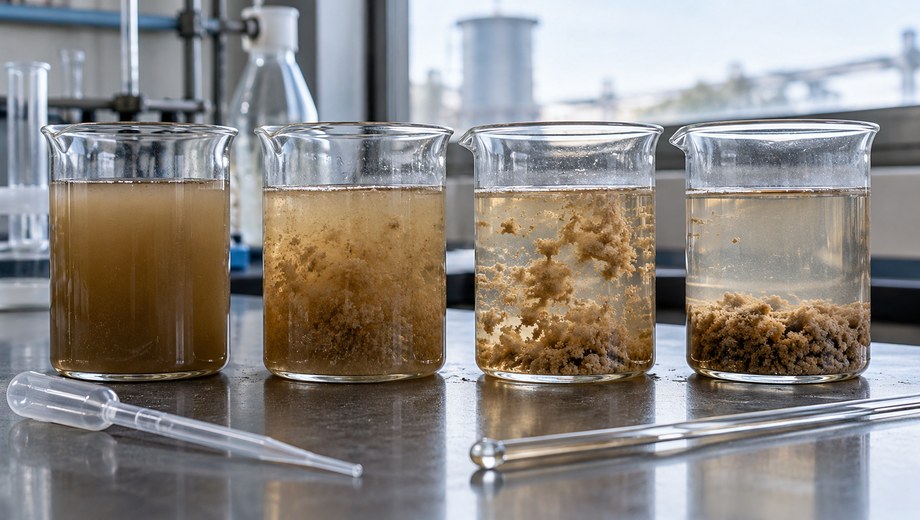
For clarification, measure the relevant supernatant quality and settling behavior. For dewatering, include solids capture, filtrate or centrate quality and cake condition. Large flocs alone are not a sufficient endpoint.
Zeta potential can help interpret particle interactions, but near-zero potential is not required for every bridging process. Therefore, use it alongside separation measurements rather than optimizing the instrument value at the expense of the actual result.
Repeat promising conditions and consider variability in the feed. A narrow result that fails after a small change may be less useful than a slightly broader operating range with consistent performance.
Translate a laboratory window into operating control
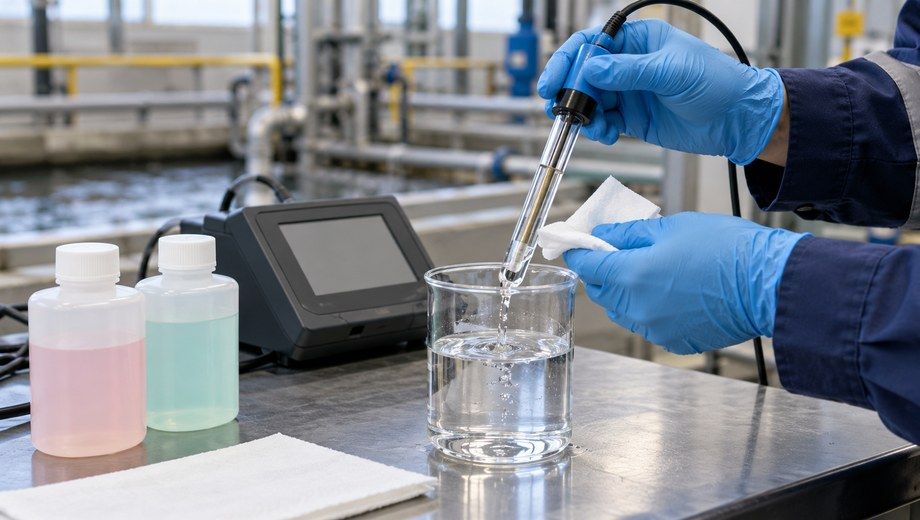
Check pH instruments, chemical feed delivery, injection points and the actual contact conditions. Changing only the nominal setpoint may not reproduce the laboratory environment.
If consumption rises, compare water characteristics and preparation records before adjusting the polymer dose. Finally, validate significant changes through an appropriate plant trial.
Technical note: Polymer grade, particle properties and coagulant chemistry must be evaluated together. This discussion does not establish a universal pH recommendation or replace the product’s preparation and stability instructions.
Connect with KolinSC
Follow our company for product updates, water treatment knowledge and industry insights.