
Drilling, bored piling, diaphragm walls, and pipe jacking all share one hidden problem: the excavated soil has to stay suspended, travel through a pipe, and separate cleanly afterward. Polyacrylamide (PAM) is the polymer that makes that happen.
Note: this is a different use from PAM’s better-known water-treatment role. In construction, the same molecule performs three jobs at once.
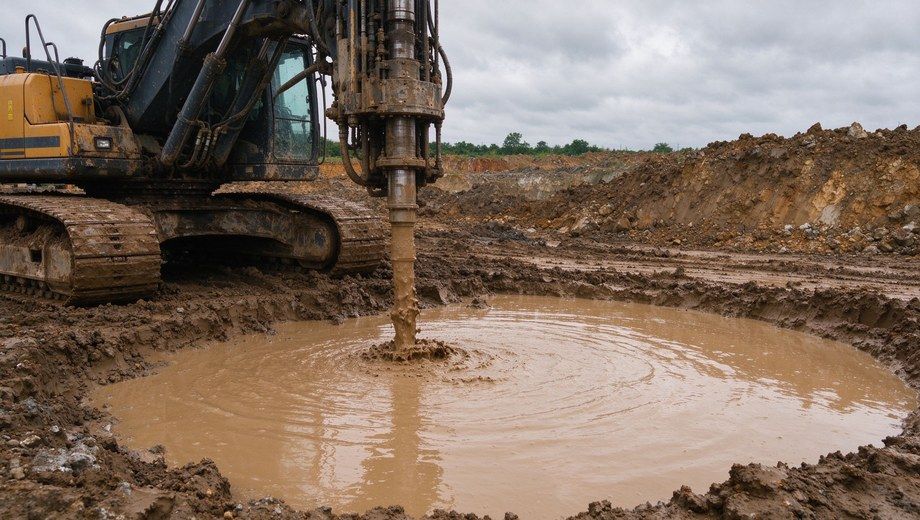
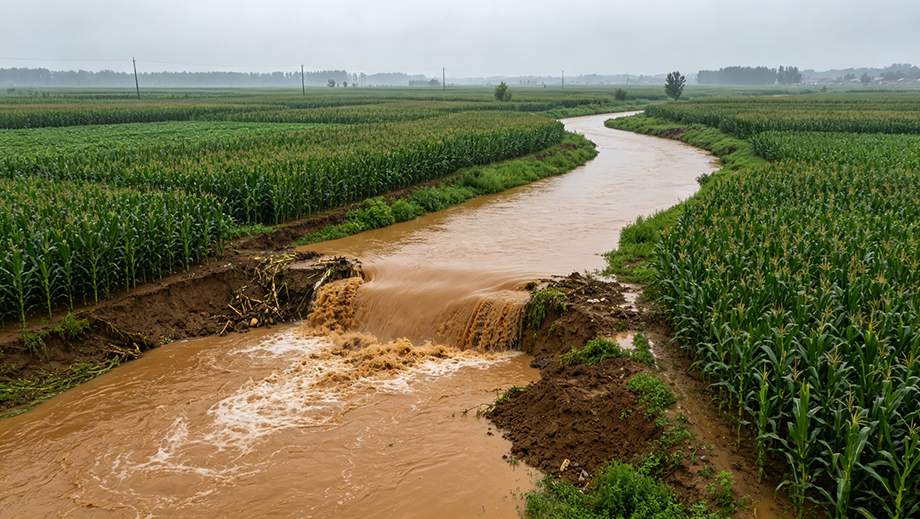
What PAM Does in Construction Slurries
- Suspension — polymer chains bridge fines so they do not settle in the circulation loop.
- Filtration control — PAM helps form a low-permeability polymer-cake that limits fluid loss into the formation.
- Drag reduction — in long pipe runs, the polymer damps turbulent eddies, cutting pumping pressure.
Ionic Type Matters
| PAM type | Typical construction use |
|---|---|
| Anionic | Sand, silt, mineral slurries; bored piles; diaphragm walls |
| Nonionic | Sensitive formations, low-pH slurries |
| Cationic | Organic-rich or negatively charged clays |
| Amphoteric | Special, variable-water conditions |
Molecular weight and charge density tune viscosity and floc strength. There is no universal grade.
Borehole Stability — But Don’t Overclaim
PAM helps maintain a stable polymer slurry. Nevertheless, borehole collapse depends on geology, slurry density, depth, and equipment too. Treat PAM as one input in the geotechnical design, not a fix.
Site Selection Workflow
Before full-scale dosing, run:
- Soil analysis — particle size, clay/sand/silt split, mineralogy.
- Water analysis — pH, hardness, salinity, temperature.
- Lab screening — compare 2–3 PAM grades at 2 concentrations.
- Slurry testing — viscosity, filtration loss, settling, pumpability.
- Trial section — confirm on-site before production.
Preparation Matters
Dry PAM must be dispersed slowly into clean water and fully hydrated before dosing. Dumping a bag into concentrated slurry creates “fish eyes” — undissolved lumps that do nothing.
After the Excavation
The same PAM often carries over to slurry dewatering at the end of the project — conditioning fines for centrifuges, filter presses, or belt presses. It is the same polymer, doing a second job.
FAQ
Chemically the same family, but grades (molecular weight, hydrolysis) are selected for different rheology. Specify the application.
In some polymer-slurry systems, yes. In others, they are combined. Site-dependent.
Typical ranges are low (hundreds of ppm), but always confirm by lab test.
Is construction PAM the same as water-treatment PAM? Chemically the same family, but grades (molecular weight, hydrolysis) are selected for different rheology. Specify the application.
Does PAM replace bentonite? In some polymer-slurry systems, yes. In others, they are combined. Site-dependent.
How much do I dose? Typical ranges are low (hundreds of ppm), but always confirm by lab test.
Conclusion
For tunneling and foundation contractors, PAM is a precision polymer — not a thickener you sprinkle in. Pick the ionic type by formation, dose by lab test, and you get stable boreholes, lower pumping cost, and easier slurry disposal.
*KolinSC supplies anionic, nonionic, cationic, and amphoteric PAM for construction slurries. Discuss your project →
Professional Water Treatment Chemical Supplier & One-Stop Industrial Solution Provider