
PAC can be useful when stormwater contains fine particles that settle poorly or phosphorus that can be transferred into removable solids. However, it needs a treatment system capable of mixing, separating and managing those solids. Therefore, adding coagulant to runoff without a controlled treatment arrangement is not a complete solution.
The case for PAC for stormwater runoff treatment depends on the catchment, the rainfall event and the required water quality. A dose established for municipal wastewater should not be carried across without testing.
Start with the pollutant that must be removed
Runoff can carry sediment, organic debris, oil-related contamination, nutrients and metals. Some pollutants travel with particles, whereas others remain dissolved. Consequently, a reduction in turbidity cannot establish that every pollutant has been removed.
PAC, or polyaluminum chloride, promotes coagulation through aluminum species that interact with particles and water chemistry. Under suitable conditions, aluminum hydroxide solids can capture fine material. Effective removal then depends on separating the resulting aggregates.
Phosphorus deserves a separate assessment. Particle capture can lower particulate phosphorus, while aluminum reactions may also help transfer some dissolved phosphate into solids. The response depends on pH, dose, competing constituents and separation. Nitrate, many dissolved salts and some organic compounds require different treatment mechanisms.
Sample events rather than relying on one bottle
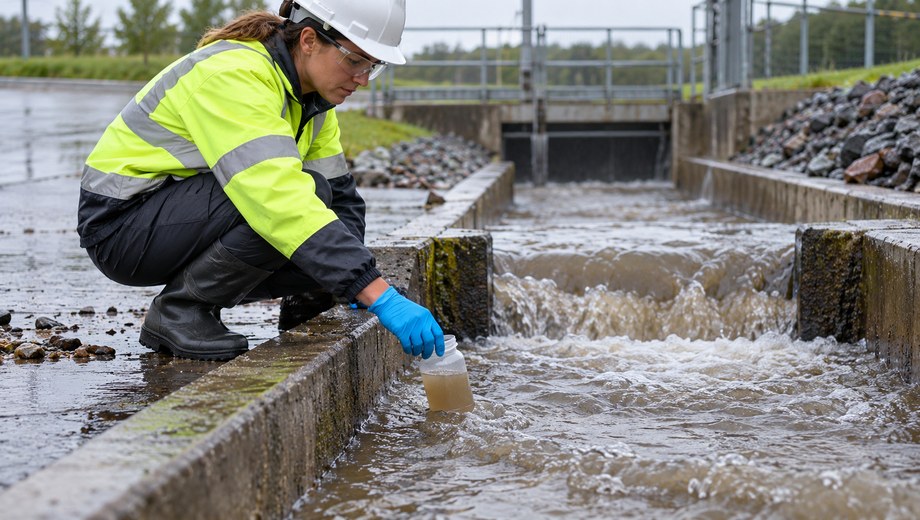
Rainfall changes flow and water composition over time. An early sample may differ from material collected later in the same event. First-flush behavior can occur, but its strength and timing should be measured rather than assumed.
Collect samples that represent relevant event conditions and record flow, sampling time, temperature and preceding weather. In addition, measure pH, alkalinity, turbidity and suspended solids where relevant. Include total and dissolved phosphorus or metals if those are the project targets.
This event profile helps identify what a chemical trial needs to represent. For example, a single convenient sample may miss the most difficult condition or suggest a dose that is excessive during the rest of the event.
Compare treatment options before selecting chemical dosing
Source control, sediment management and suitable green infrastructure can reduce the load reaching a treatment unit. Chemical coagulation may complement them where fine solids or nutrient targets remain difficult to achieve. It should not automatically replace measures that prevent pollution or manage runoff volume.
Consider available land, retention time, hydraulic loading and maintenance capacity. A compact separator may benefit from better particle aggregation, but chemical storage, sludge holding and access still require space.
The US EPA stormwater program overview provides context for stormwater controls and the US permitting framework. It is not an approval of a PAC product or a substitute for the requirements applying to a particular site.
Design trials around the separation process
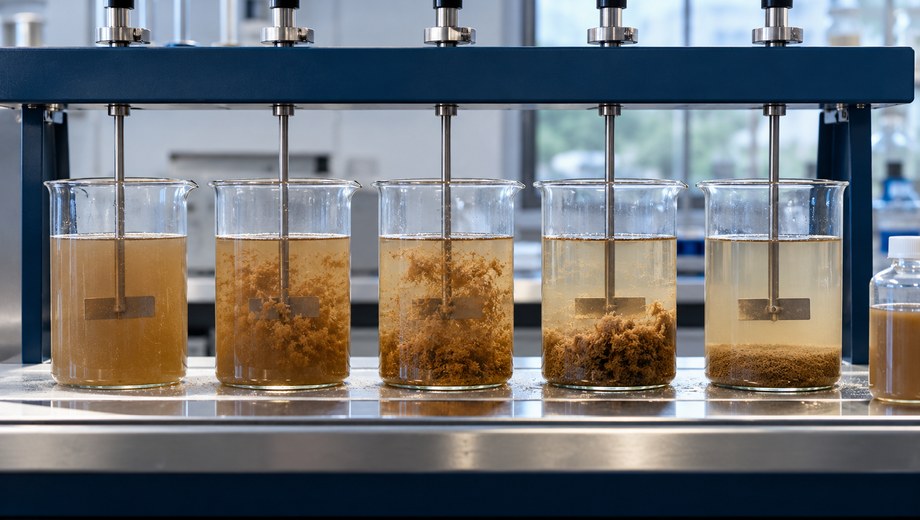
Use representative runoff to compare candidate PAC grades and dose ranges. Keep preparation, mixing and sampling consistent so product differences can be interpreted. Then measure the target endpoints rather than selecting the jar with the largest visible flocs.
However, a sedimentation test does not fully represent a flotation or filtration installation. Where necessary, extend the evaluation to the proposed equipment. Meanwhile, record final pH and relevant residual aluminum because successful particle removal does not guarantee acceptable residuals.
In addition, low alkalinity can make the pH response particularly important. Increasing the dose may change the chemistry enough to worsen the result, so do not use more coagulant as the automatic response to cloudy water.
Relate dose to a changing flow
Flow-proportional dosing can help match chemical delivery to water volume. However, pollutant concentration can change independently of flow. Turbidity feedback may be useful for some duties, but it cannot directly describe every dissolved pollutant.
For a dose expressed as supplied product:
Product feed in kg/h = dose in mg/L × water flow in m³/h ÷ 1,000.
For illustration, 20 mg/L at 50 m³/h corresponds to 1 kg/h of supplied product. These inputs demonstrate unit conversion only; they are not recommended operating conditions. In addition, liquid feed settings require the actual product or stock concentration and density.
The control arrangement should address flow interruptions, unreliable sensors and conditions outside the tested range. A facility needs a defined response when the treatment cannot maintain its acceptance criteria, rather than allowing dosing to continue without verification.
Prepare for idle periods and peak solids loads
Because stormwater systems can remain idle between events, check pump delivery, chemical condition, mixing and monitoring readiness before operation resumes. Stale readings or blocked feed lines can undermine a previously successful program.
Size sludge handling around the expected event load, not only an average daily flow. Captured sediment and pollutants remain in the solids and need an appropriate destination. Returning separated sludge to the flow would undo the treatment benefit.
| Operating question | Evidence to review |
| Is coagulation needed | Pollutant fractions and untreated separation performance |
| Can the system handle an event | Flow range, contact time and separator capacity |
| Is dosing controlled | Trial range, calibrated delivery and monitoring |
| Are residuals managed | Effluent results, collected solids and handling records |
Judge the complete event outcome
Compare treated concentration and, where flow data allow, pollutant mass over the event. A favorable grab sample is insufficient to establish sustained performance. Repeat the assessment when seasons or land use change.
Technical note: PAC suitability, chemical acceptance and discharge conditions must be established for the actual catchment and treatment system. Performance data for conventional liquid alum should not be treated as equivalent PAC data without a justified comparison.