Introduction
With the continuous growth of industrial production, the volume and complexity of industrial wastewater are increasing worldwide. Industries such as textiles, mining, food processing, chemicals, pharmaceuticals, paper manufacturing, and metal processing generate wastewater containing suspended solids, organic pollutants, heavy metals, oils, and other complex contaminants.
Effective industrial wastewater treatment has become essential for environmental protection, regulatory compliance, and sustainable industrial development. A well-designed wastewater treatment system not only helps companies meet discharge standards but also improves water reuse opportunities, reduces operating costs, and supports long-term environmental responsibility.
Industrial wastewater treatment is not a single process. Different industries require different treatment technologies according to wastewater characteristics, production processes, and local discharge requirements. Among various treatment chemicals, Poly Aluminium Chloride (PAC) and Polyacrylamide (PAM) are two important chemical solutions widely used in coagulation, flocculation, clarification, flotation, and sludge management.
Industrial Wastewater Treatment Overview
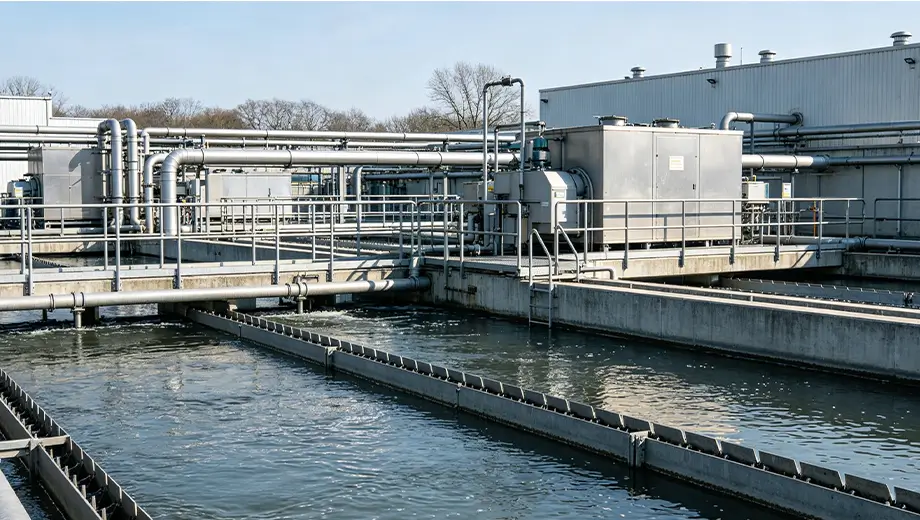
Industrial wastewater management generally follows two major approaches. Large factories with high wastewater volumes, complex pollutants, or locations far from municipal facilities usually require complete independent wastewater treatment systems.
These systems may include:
1. Pretreatment
2. Coagulation and flocculation
3. Sedimentation or dissolved air flotation
4. Biological treatment
5. Advanced treatment
6. Sludge management
For smaller factories located near municipal wastewater treatment facilities, wastewater may undergo pretreatment before being discharged into municipal systems, provided that local regulations and discharge standards are satisfied.
The selection of treatment processes depends on many factors, including wastewater composition, pollutant concentration, required discharge limits, and potential water reuse targets.
The Role of Coagulation and Flocculation in Wastewater Treatment
Coagulation and flocculation are key stages in many industrial wastewater treatment systems.
Industrial wastewater often contains tiny suspended particles and colloidal substances that are difficult to remove through natural settling. These particles remain stable because of electrical charges on their surfaces.
Coagulants such as Poly Aluminium Chloride (PAC) work by neutralizing these charges and allowing small particles to combine into larger aggregates called flocs.
After coagulation, flocculants such as Polyacrylamide (PAM) help strengthen and enlarge these flocs, improving separation efficiency during sedimentation, flotation, or filtration processes.
This combination of PAC and PAM can significantly improve:
- – Suspended solids removal
- – Water clarification
- – Sludge settling performance
- – Sludge dewatering efficiency
- – Overall wastewater treatment stability
Poly Aluminium Chloride (PAC) in Industrial Wastewater Treatment
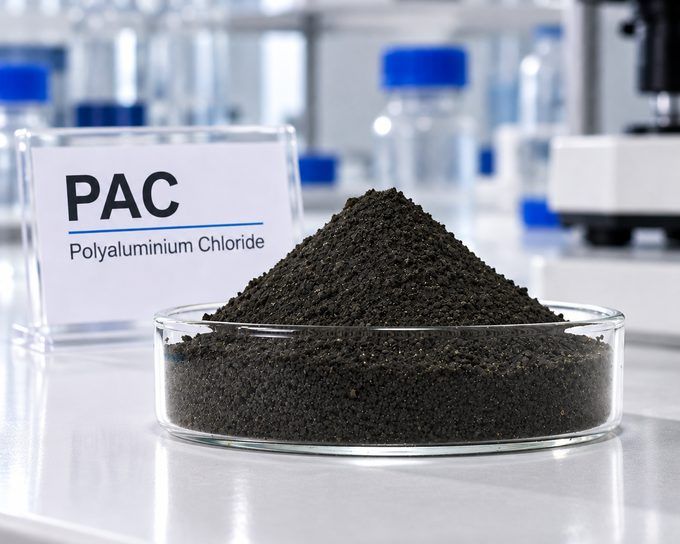
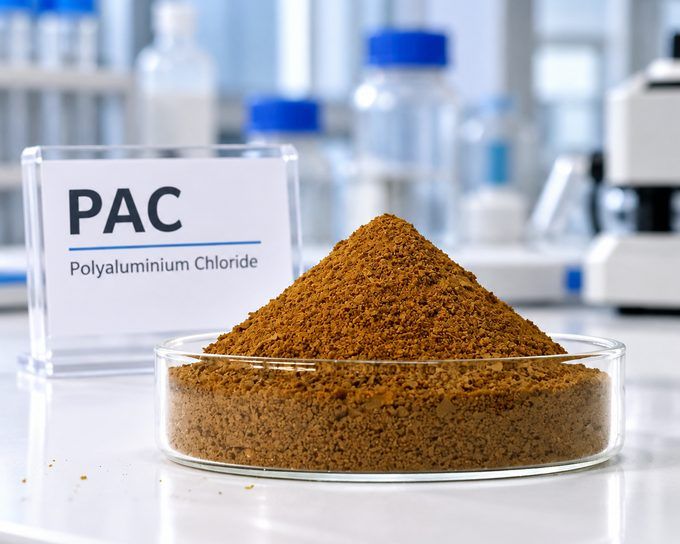
Poly Aluminium Chloride, commonly known as PAC, is an inorganic polymer coagulant widely used in water and wastewater treatment applications.
Compared with traditional aluminum salts, PAC provides excellent coagulation performance under a wide range of water conditions. It can effectively remove suspended solids, colloidal particles, color substances, and certain organic pollutants.
The main advantages of PAC include:
- High coagulation efficiency
PAC forms active polymeric aluminum species that can quickly destabilize impurities and promote particle aggregation.
- Wide application range
PAC can be applied in municipal water treatment, industrial wastewater treatment, mining wastewater treatment, textile wastewater treatment, and many other fields.
- Lower sludge generation
Compared with some traditional coagulants, PAC can achieve effective treatment with relatively lower dosage, helping reduce sludge production.
- Improved treatment stability
PAC performs well under different temperature and pH conditions, making it suitable for various industrial environments.
In industrial applications, PAC quality and selection are important. Factors such as aluminum oxide content, basicity, appearance, solubility, and application requirements should be considered when selecting a suitable product.
Polyacrylamide (PAM) in Wastewater Treatment
Polyacrylamide, commonly known as PAM, is a high molecular weight polymer widely used as a flocculant and sludge conditioning agent.
Unlike PAC, which mainly destabilizes particles, PAM works by creating bridges between small particles, forming larger and stronger flocs.
PAM is available in different ionic types, including:
- – Anionic Polyacrylamide
- – Cationic Polyacrylamide
- – Nonionic Polyacrylamide
- – Amphoteric Polyacrylamide
Different wastewater characteristics require different PAM types.
For example, cationic PAM is commonly used for sludge dewatering applications, while anionic PAM is often applied in mineral processing and industrial wastewater clarification.
The correct PAM selection can improve:
- – Floc formation
- – Solid-liquid separation
- – Sedimentation speed
- – Sludge dewatering performance
- – Treatment efficiency
Industrial Wastewater Treatment Process with PAC and PAM
A typical industrial wastewater treatment process may include the following stages:
1. Raw Wastewater
Wastewater generated from industrial production enters the treatment system. It may contain suspended solids, organic matter, chemicals, and other pollutants.
2. Coagulation and Flocculation
PAC is added to destabilize suspended particles. PAM is then introduced to promote larger floc formation.
3. Sedimentation or Dissolved Air Flotation
The formed flocs are separated from water through gravity settling or flotation processes.
4. Biological Treatment
Biological processes are used to reduce biodegradable organic pollutants through microbial activity.
5. Advanced Treatment
Additional processes such as filtration, oxidation, membrane treatment, or other advanced technologies may be applied to achieve stricter discharge or reuse standards.
6. Treated Water and Sludge Management
Treated water can be discharged safely or reused for industrial applications. The generated sludge requires proper conditioning, thickening, and dewatering.
Choosing Suitable Water Treatment Chemicals
Selecting the right treatment chemicals is essential for achieving stable wastewater treatment performance.
Important factors include:
- Wastewater characteristics
Different industries produce different wastewater compositions. Chemical selection should match pollutant types and treatment goals.
- Chemical quality
Reliable chemical quality ensures consistent treatment performance and reduces operational risks.
- Technical support
Professional suppliers can help customers select suitable PAC and PAM products according to application conditions.
KolinSC Water Treatment Chemical Solutions
Henan Kolin Supply Chain Co., Ltd. supplies PAC, PAM, Potassium Alum, and Ammonium Alum for global water treatment applications.
KolinSC focuses on providing reliable water treatment chemical solutions for industrial customers worldwide. Through stable product quality, professional service, and supply chain support, KolinSC helps customers improve wastewater treatment efficiency and achieve sustainable development goals.
Conclusion
Industrial wastewater treatment is becoming increasingly important as industries continue to develop and environmental requirements become stricter.
PAC and PAM play essential roles in modern wastewater treatment by improving coagulation, flocculation, clarification, and sludge management performance.
Choosing suitable water treatment chemicals and reliable suppliers can help industrial companies achieve better treatment results, lower operating costs, and more sustainable environmental management.
FAQ
- What is PAC used for in wastewater treatment?
PAC is mainly used as a coagulant to remove suspended solids, colloidal particles, and certain pollutants through coagulation.
- What is PAM used for in wastewater treatment?
PAM is mainly used as a flocculant to improve floc formation, sedimentation, flotation, and sludge dewatering.
- Can PAC and PAM be used together?
Yes. PAC and PAM are often used together because they perform different functions and can improve overall treatment efficiency.
- How do I choose the right wastewater treatment chemicals?
The selection depends on wastewater characteristics, treatment objectives, operating conditions, and required discharge standards.