Introduction
Solid pollutants are among the most common contaminants found in natural water and industrial wastewater. They degrade water appearance, raise turbidity, disrupt aquatic ecosystems and create major operational challenges for water‑treatment systems.
Based on particle size and physical state, solid‑related contaminants in water fall into three core groups: suspended pollutants, colloidal pollutants, and dissolved pollutants.
Grasping the unique characteristics of each pollutant group is critical for selecting correct water‑treatment workflows and chemicals. This knowledge is especially important when designing coagulation‑flocculation systems using PAC (Poly Aluminium Chloride) and PAM (Polyacrylamide).
1. Suspended Solids in Water
Suspended solids are undissolved solid particles dispersed within the water matrix, generally larger than 100 nm. They are the primary source of visible water turbidity.
Suspended solids come from both natural sources and human industrial activities. Typical examples include:
- Soil and clay
- Sand and silt
- Organic debris
- Plant and animal residues
- Plankton and microorganisms
- Fine industrial particulate waste
Suspended solids can be further divided into heavy suspended particles and light suspended particles.
Heavy Suspended Particles
Heavy‑weight particles such as sand, silt and inorganic mineral grains settle down naturally under quiescent water conditions, a physical process known as sedimentation.
For wastewater loaded with high concentrations of heavy suspended solids, sedimentation tanks, settling basins and other solid‑liquid separation equipment can achieve effective removal without chemical additives.
Light Suspended Particles
Light‑density particles stay suspended in water for extended periods. Organic debris decomposed from plant and animal matter may float on the surface or distribute evenly across the whole water body.
Gravity sedimentation alone rarely works well for light suspended particles. Coagulation and flocculation with PAC and PAM are usually required prior to sedimentation or dissolved‑air flotation.
2. Colloidal Pollutants
Colloidal pollutants are far finer than conventional suspended solids, with particle sizes ranging roughly 1 nm‑100 nm.
Common colloidal substances in polluted water:
- Clay‑based inorganic colloids
- High‑molecular‑weight organic matter
- Humic substances
- Plant‑derived organic decomposition products
Colloids are the main reason water remains cloudy even after large suspended particles have already been removed by settling or filtration.
Why Colloidal Particles Are Difficult to Remove
Colloidal particles possess extremely large specific surface area. They adsorb ions from surrounding water and carry uniform surface electrical charges.
Particles carrying identical electrical charges repel each other. Therefore colloids remain stably dispersed inside water; they cannot aggregate into larger settleable flocs spontaneously.
Colloidal particles also scatter visible light, producing persistent turbidity. Conventional sedimentation tanks cannot remove colloidal pollutants efficiently. Chemical coagulation is mandatory to break colloidal stability.
3. Dissolved Pollutants
Dissolved pollutants are smaller than approximately 1 nm. They exist as individual molecules or free ions fully mixed within the water phase.
Different from suspended and colloidal particles, dissolved contaminants do not generate visible cloudiness or turbidity. For example, sodium chloride (table salt) completely dissolves into transparent salt‑water solution even at high concentrations.
Dissolved pollutants cover low‑molecular‑weight organic compounds and inorganic ions.
Typical dissolved organic substances:
- Organic acids
- Organic bases
- Amino acids
- Carbohydrates
Common dissolved ions:
Cations: H⁺, Na⁺, K⁺, Ca²⁺, Mg²⁺, Fe²⁺, Mn²⁺, Cu²⁺, Al³⁺, NH₄⁺
Anions: OH⁻, HCO₃⁻, Cl⁻, SO₄²⁻, NO₃⁻
Since dissolved pollutants exist at molecular / ionic scale, they require completely different treatment technologies compared to suspended solids and colloids. Suitable technologies may cover ion exchange, adsorption, membrane filtration, chemical precipitation, biological degradation and advanced oxidation processes.
4. Why Solid Pollutants Create Serious Problems
Within practical water‑treatment engineering, “solid pollutants” mostly refers to suspended solids and particulate colloidal matter.
Massive solid particles entering rivers, lakes and reservoirs trigger multiple negative environmental and operational consequences.
Increased Water Turbidity
Suspended particles turn water cloudy and degrade visual water quality. High turbidity also disturbs downstream water‑treatment workflows and weakens disinfection efficiency.
Sedimentation & Riverbed Siltation
Suspended solids eventually settle out and accumulate on reservoir bottoms and riverbeds.
Excessive sediment buildup reduces watercourse capacity, modifies natural aquatic habitats and threatens survival of benthic bottom‑dwelling organisms.
Negative Impacts on Aquatic Ecosystems
Deposited sediment smothers habitats for benthic organisms and interferes with reproduction and survival cycles.
High turbidity blocks sunlight penetration into the water column. This suppresses submerged aquatic plant growth and breaks the whole aquatic food web.
Harmful Impacts for Agricultural Irrigation
When suspended solids are deposited onto irrigated farmland, fine particles clog soil pore spaces. This reduces soil aeration and water infiltration capacity, restraining root development and limiting crop yields.
5. Industrial Sources Generating Suspended Pollutants
Suspended solids are widely generated across diverse industrial and municipal operations. Representative industries and waste streams:
- Coal washing and ash‑handling wastewater
- Metallurgical manufacturing effluent
- Mining wastewater
- Fertilizer production wastewater
- Chemical manufacturing wastewater
- Construction site runoff
- Food‑processing and slaughterhouse wastewater
- Pulp & paper mill effluent
- Textile manufacturing wastewater
- Municipal domestic sewage
The chemical composition of suspended solids varies drastically from industry to industry.
Mining wastewater is dominated by inorganic mineral particles; food‑processing wastewater carries large fractions of biodegradable organic solids.
This compositional difference is a core consideration for selecting treatment processes and optimizing PAC / PAM chemical dosage.
6. How PAC and PAM Remove Solid Pollutants
For wastewater loaded with fine suspended particles and stable colloids, coagulation and flocculation are proven standard treatment workflows.
PAC (Poly Aluminium Chloride)
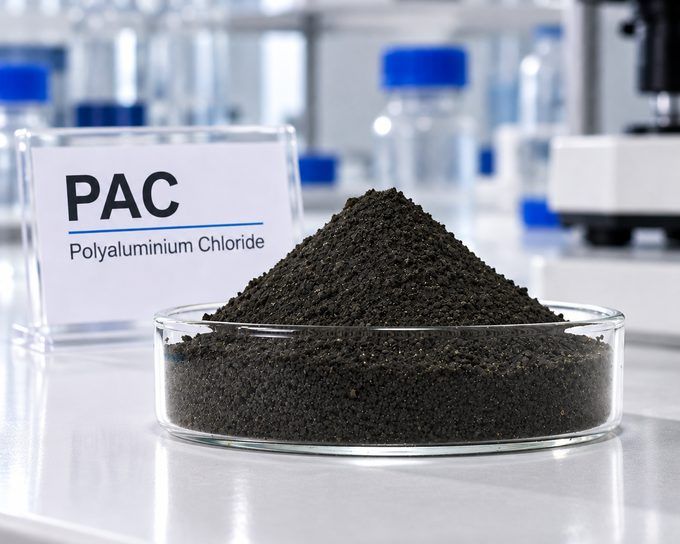
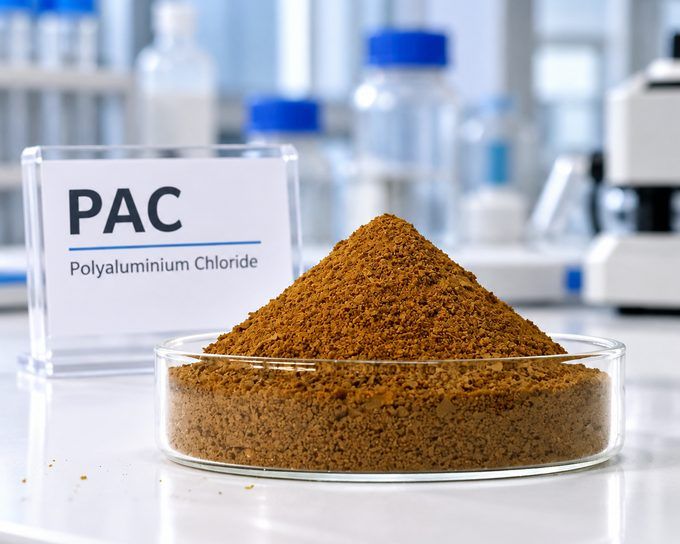
PAC is a widely‑applied inorganic coagulant for drinking‑water and wastewater treatment.
Its core function is destabilizing suspended solid particles and colloids. PAC neutralizes particle surface charges, breaking colloidal stability so tiny particles can aggregate into micro‑flocs.
Major PAC application scenarios:
- Turbidity reduction
- Suspended solids removal
- Colloid destabilization
- Water color removal
- Industrial wastewater pretreatment
- Municipal wastewater treatment
- Drinking‑water purification
Correct PAC product grade and dosage are determined by wastewater pH, raw turbidity, suspended‑solid concentration, organic loading and water temperature.
PAM (Polyacrylamide)
PAM is a polymeric flocculant, applied together with or immediately after PAC coagulation.
Once PAC has destabilized micro‑particles, long‑chain PAM molecules create adsorption‑bridging effects, binding small micro‑flocs together into large, compact, robust flocs.
These large flocs can be easily separated by:
- Gravity sedimentation
- Dissolved‑air flotation (DAF)
- Filtration
- Sludge dewatering
Three main ionic types of PAM are available: anionic PAM, cationic PAM and nonionic PAM. Engineers select suitable PAM grades strictly based on wastewater characteristics and treatment targets.
7. PAC + PAM Combined Treatment Workflow
PAC and PAM deliver complementary, non‑overlapping functions within one treatment system.
- PAC: performs coagulation, charge neutralization and particle destabilization
- PAM: promotes floc growth, strengthens floc structure, improves solid‑liquid separation efficiency
Typical full process sequence:
Wastewater → PAC Dosing → Rapid Mixing → PAM Dosing → Slow Flocculation → Sedimentation / DAF → Filtration
This combined chemical system greatly improves removal efficiency for suspended solids and colloidal pollutants, meanwhile enhancing sludge settling and dewatering performance.
Important note: Never rely purely on general‑purpose dosage recommendations. Laboratory jar testing is strongly recommended to confirm the optimal PAC / PAM product type and exact dosage for each unique wastewater sample.
8. How to Choose Suitable Treatment Technologies
Different pollutant categories require targeted treatment solutions.
表格
| Pollutant Type | Typical Characteristics | Common Treatment Methods |
|---|---|---|
| Suspended solids | Larger visible particles | Sedimentation, filtration, coagulation‑flocculation |
| Colloidal particles | Ultra‑fine, electrically stable particles | Coagulation, flocculation, filtration |
| Dissolved pollutants | Molecular or ionic form | Adsorption, ion‑exchange, membrane filtration, chemical precipitation |
| Organic matter | Raises COD / BOD values | Biological treatment, oxidation, adsorption |
| Heavy metals | Toxic dissolved or particulate contaminants | Chemical precipitation, adsorption, ion‑exchange |
For wastewater containing mixed suspended solids plus colloidal pollutants, chemical coagulation‑flocculation acts as high‑efficiency pretreatment or primary‑stage treatment.
9. Conclusion
Solid pollutants in water exist in three distinct forms: suspended, colloidal, and dissolved. Despite huge differences in particle dimension and physical behaviours, all three categories can deteriorate raw water quality and negatively affect overall wastewater‑treatment performance.
Suspended solids are relatively large particles that may settle by gravity. Colloidal particles are extremely fine and remain dispersed due to electrostatic repulsion. Dissolved pollutants exist as molecules or ions and demand specialized advanced treatment technologies.
For industrial wastewater with high suspended‑solid and colloidal loading, PAC and PAM are mainstream chemical solutions to boost coagulation, flocculation, sedimentation, flotation, filtration and sludge dewatering results.
Selecting proper PAC and PAM products requires thorough understanding of wastewater quality parameters. Laboratory jar testing is always best practice before full‑scale plant deployment.
For water‑treatment plant operators, wastewater‑treatment contractors, environmental engineering firms and water‑treatment‑chemical distributors, deep understanding of solid‑pollutant characteristics is the foundation for designing reliable, cost‑effective wastewater‑treatment solutions.
References:
US EPA Water Pollution Resources
WHO Water Quality Guidelines