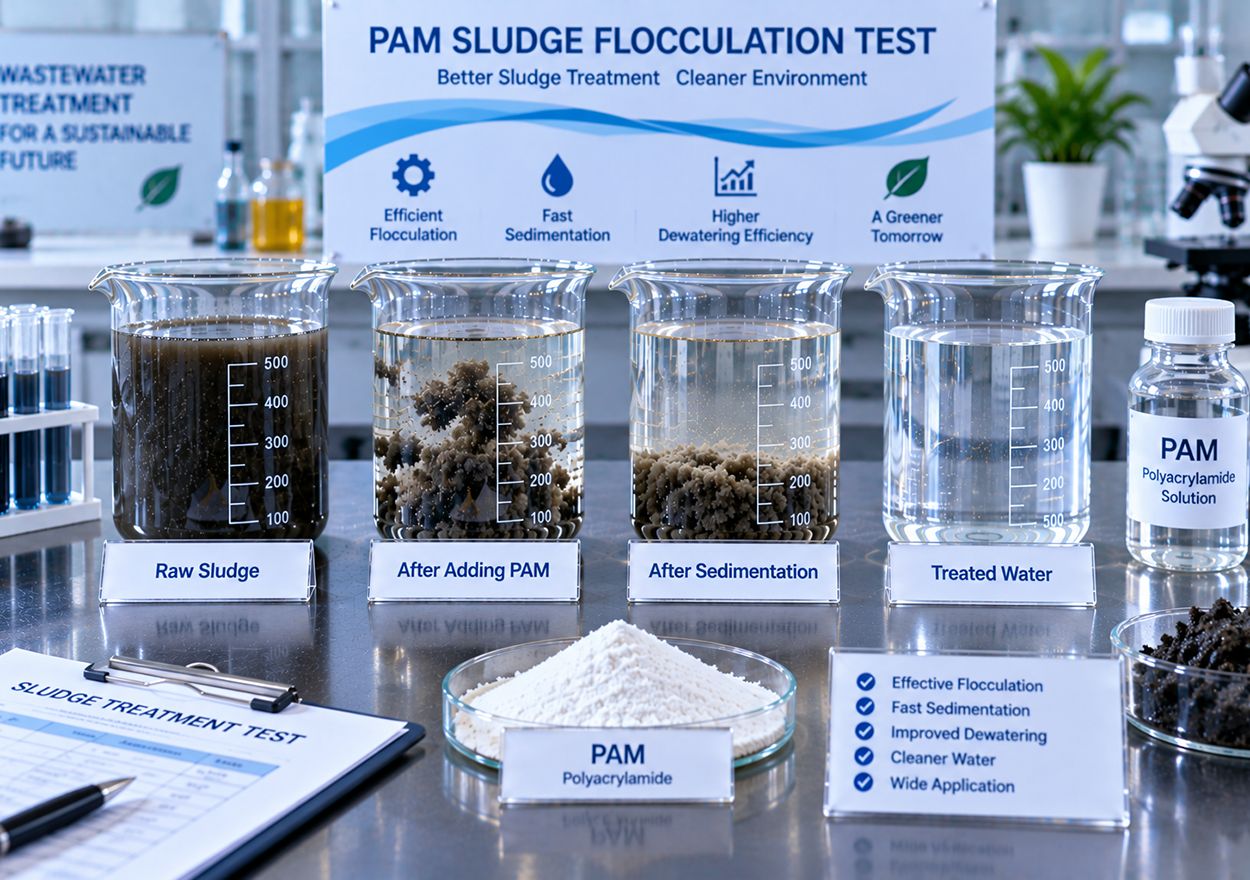
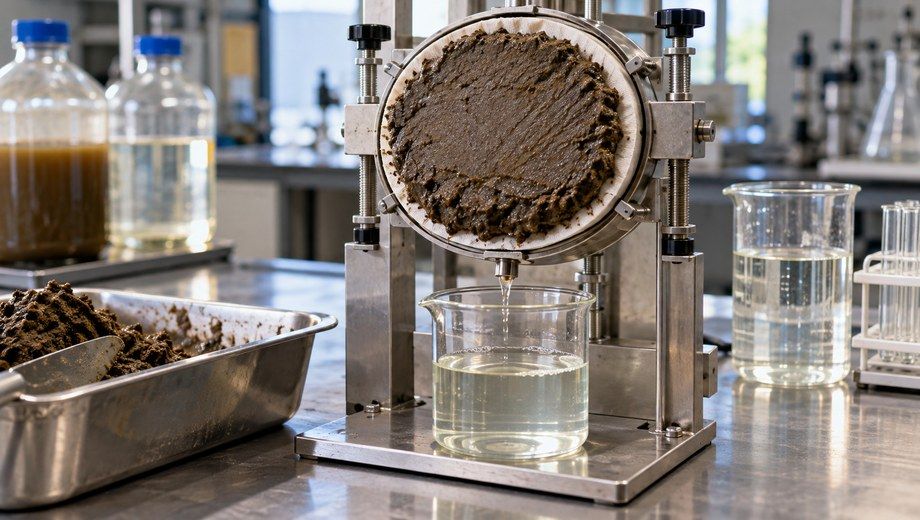
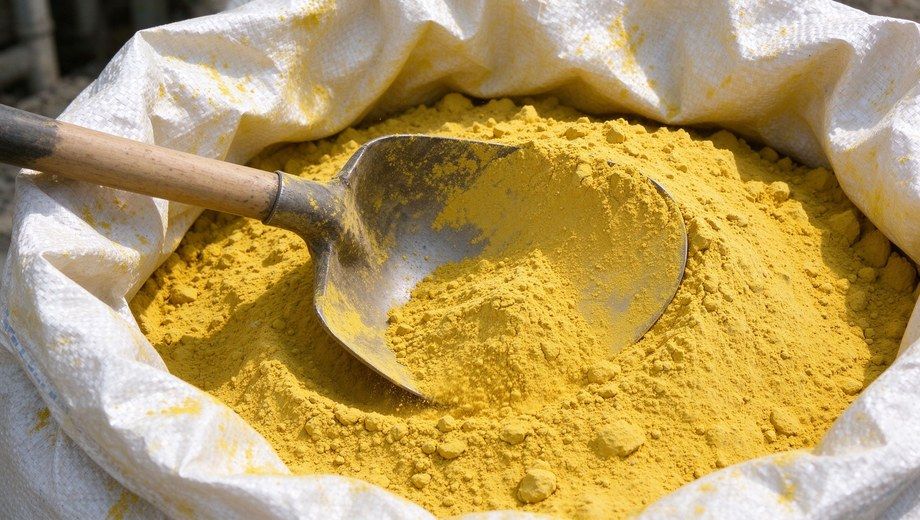
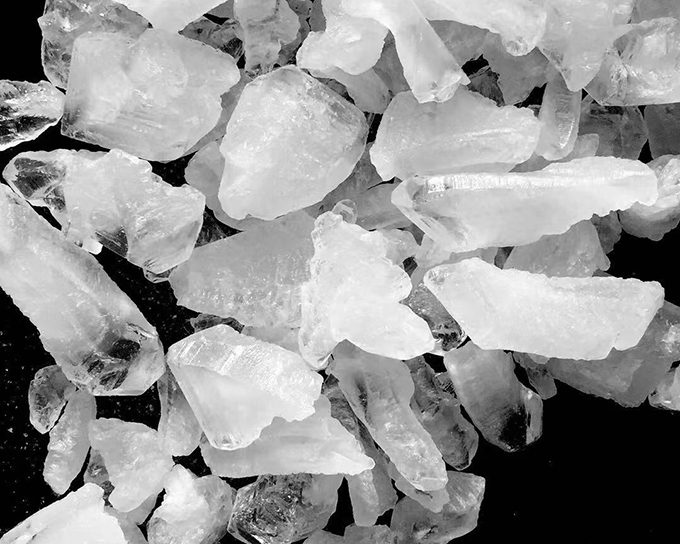
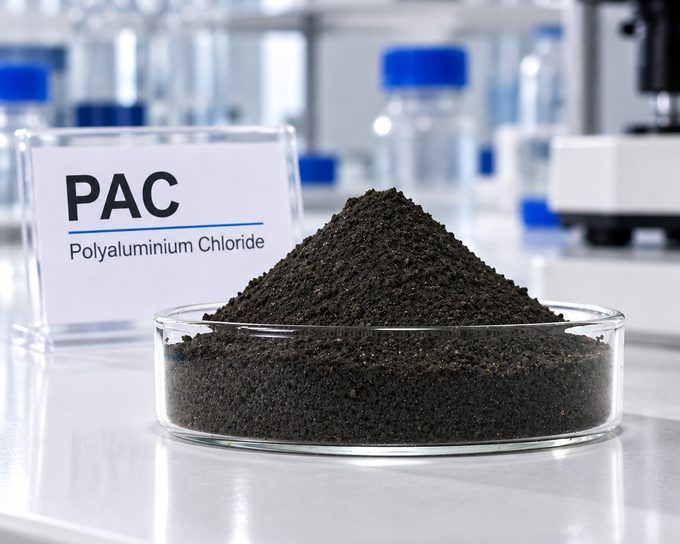
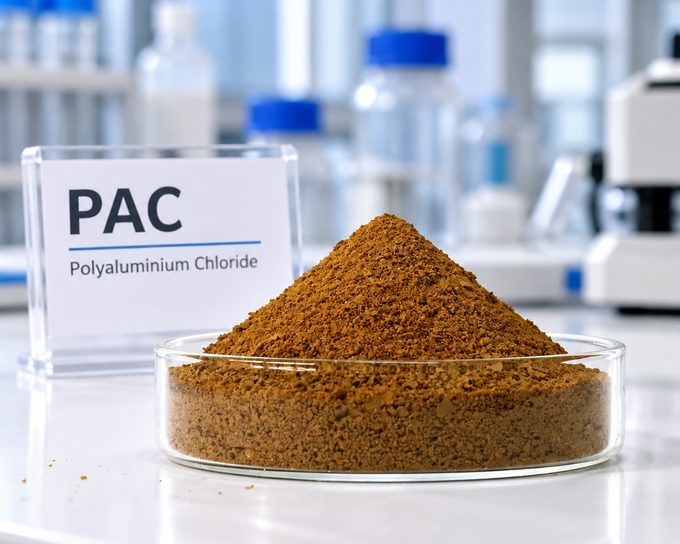
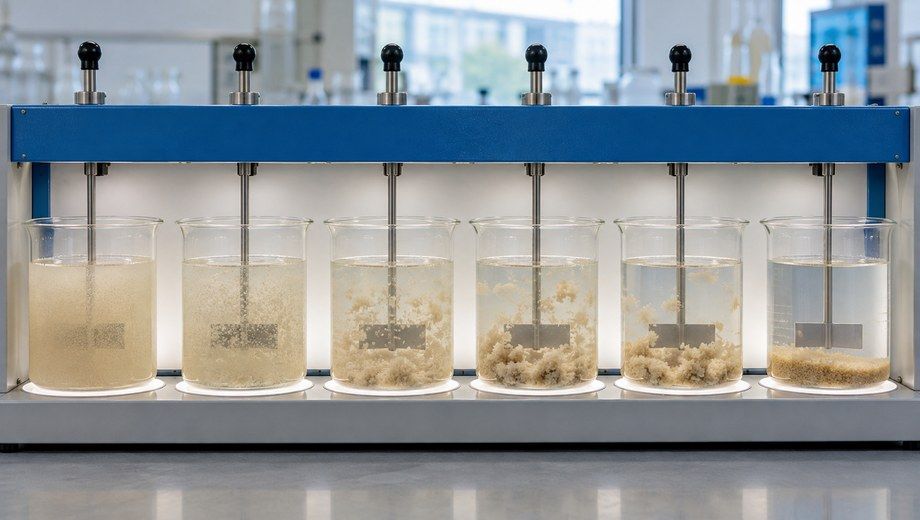
A useful jar test for PAC and PAM separates chemical effects from preparation and mixing effects. Start with a representative water sample, compare a coagulant dose series, and then evaluate whether a polymer improves the required separation result. Changing both doses at once can make the results difficult to interpret.
Polyaluminum chloride, or PAC, primarily supports coagulation. Polyacrylamide-based flocculants, or PAM, can help particles form larger aggregates. However, neither product has a universal dose that applies to every water source or treatment plant.
Define the treatment result before setting up the jars
First, identify what the test is intended to improve. For clarification, settled turbidity or suspended solids may be useful endpoints. Other applications may require color, organic matter or metal measurements as well.
Choose a test sequence that represents the process. A settling test is not a complete simulation of dissolved air flotation, and visible floc formation cannot establish dewatering performance. Therefore, the laboratory endpoint must match the equipment and treatment objective.
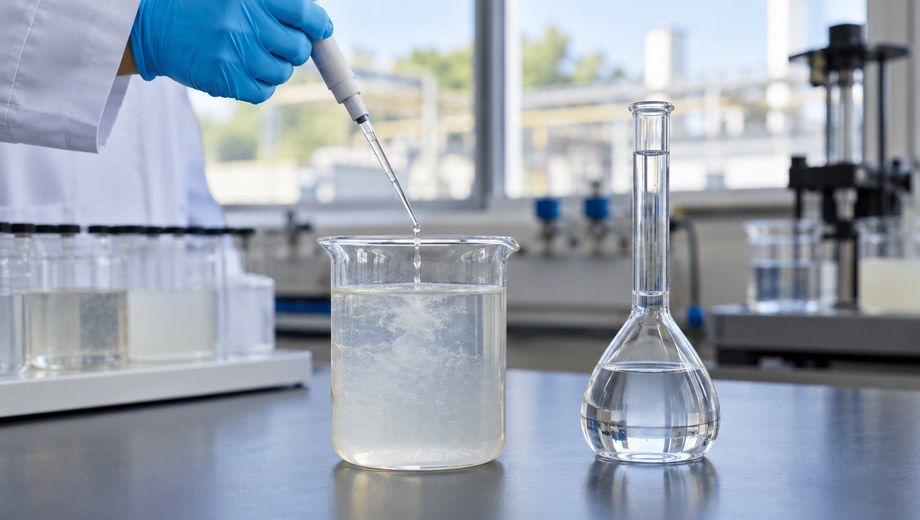
Prepare identical vessels, a controlled mixing apparatus and calibrated measuring equipment. Accurate pipettes or syringes are needed for small chemical additions. In addition, use suitable personal protection and follow the SDS for the actual chemicals.
Collect and characterize a representative sample
Record the sampling location, time and relevant production conditions. Measure initial pH, temperature and turbidity; include alkalinity or other process-specific parameters where needed. If the water changes across shifts or seasons, plan more than one test series.
Gently mix the bulk sample before distributing equal volumes among the jars. Keep testing delays and storage conditions consistent. Otherwise, differences between jars may reflect the sample rather than the chemical program.
The US EPA surface water treatment guidance library provides background on coagulation and clarification evaluation. Wastewater trials still need endpoints selected for the particular stream.
Prepare stock solutions on a stated basis
Record the product grade, lot, preparation method and stock concentration. For PAC, distinguish dose expressed as supplied product from dose expressed as aluminum or Al₂O₃ equivalent. For PAM, identify supplied-product dose and active-polymer dose when comparing different formulations.
A stock made with 10 g of supplied PAC and brought to a final volume of 1 L contains 10 g/L of supplied product. It does not contain 10 g/L of aluminum merely because PAC contains aluminum.
Dry PAM requires controlled wetting and enough hydration time. Meanwhile, emulsion products require their own dilution and activation procedure. Follow the product instructions so poor preparation does not invalidate the trial.
Calculate the stock volume accurately
When dose D is in mg/L, sample volume V is in L, and stock concentration C is in g/L:
Stock volume in mL = D × V ÷ C.
For example, a 1 L sample receiving an illustrative dose of 40 mg/L from a 10 g/L stock needs 4 mL of stock. This shows the calculation only; it is not a recommended PAC dose.
For dilute polymer additions, check whether the calculated volume can be measured reliably. If not, prepare a suitable working dilution under the supplier’s guidance. Also account for dilution water when it would materially change the sample volume.
Screen PAC first and then investigate PAM
Include an untreated control. Where practical, add a reference treatment representing the current plant program. Test a PAC dose range selected from existing operation or preliminary screening rather than copying values from another facility.
Distribute PAC during the rapid-mix stage, then use a controlled flocculation period and separation stage. Record the chemical addition times. Mixer rpm alone is not transferable between instruments because impeller geometry and vessel size affect the mixing conditions.
Once a promising PAC range has been identified, compare several PAM grades or doses at controlled coagulant conditions. PAC followed by PAM is a common starting sequence. However, the timing and addition point must be checked for the actual application.
| Test stage | Variable to investigate | Conditions to hold consistent |
| PAC screening | PAC dose or grade | Water, preparation, mixing and sampling |
| PAM screening | PAM grade or dose | Selected PAC conditions and separation method |
| Confirmation | Repeatability and operating range | Documented test procedure |
Measure results at the same time and location
Sample the supernatant after a defined separation period, using a consistent depth and technique. Avoid disturbing the sludge layer. Then measure the selected endpoints and final pH.
Observe floc development and settling, but use those observations alongside analytical results. Large flocs may be fragile, and clear-looking water can still contain dissolved contaminants. Consequently, appearance alone should not decide the winner.
Turbidity reduction can be calculated as (initial turbidity − final turbidity) ÷ initial turbidity × 100. A high reduction percentage is useful, but the final value and the actual treatment requirement remain essential.
Confirm an operating range before scaling up
Repeat promising conditions and examine how sensitive the result is to small changes. A robust range is often more useful than one favorable jar. Finally, validate significant changes through a supervised plant trial and monitor chemical consumption, separation performance and effluent quality.
KolinSC supplies PAC and PAM for treatment evaluation. Share your water characteristics, test procedure and required result when discussing candidate grades and supporting documents.
Professional Water Treatment Chemical Supplier & One-Stop Industrial Solution Provider