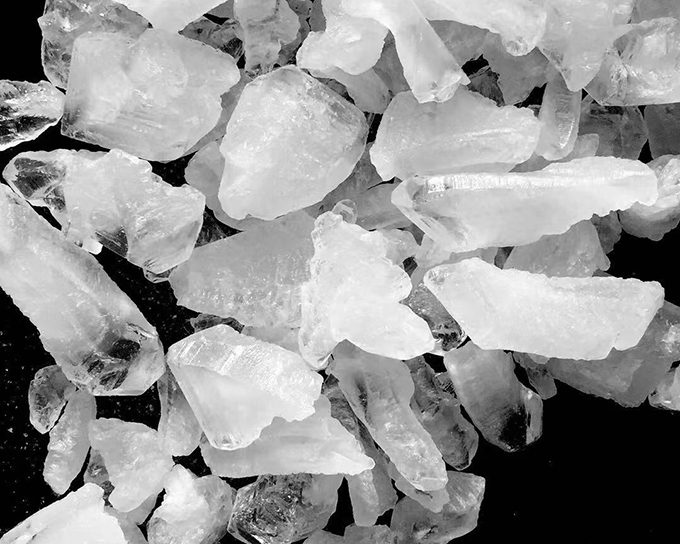
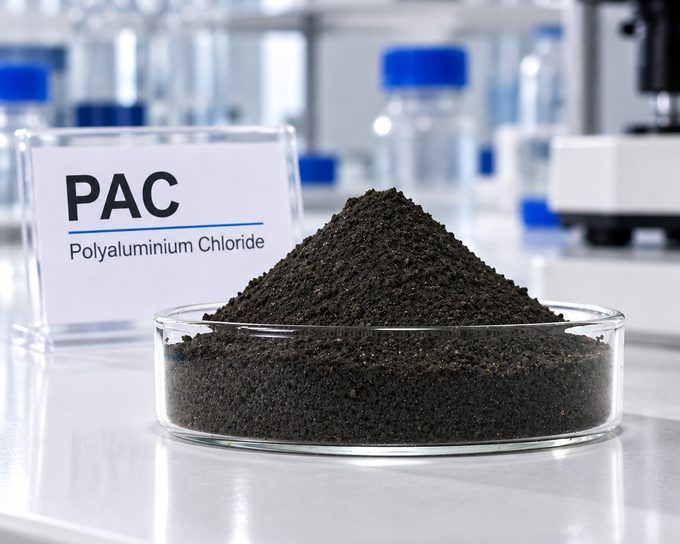
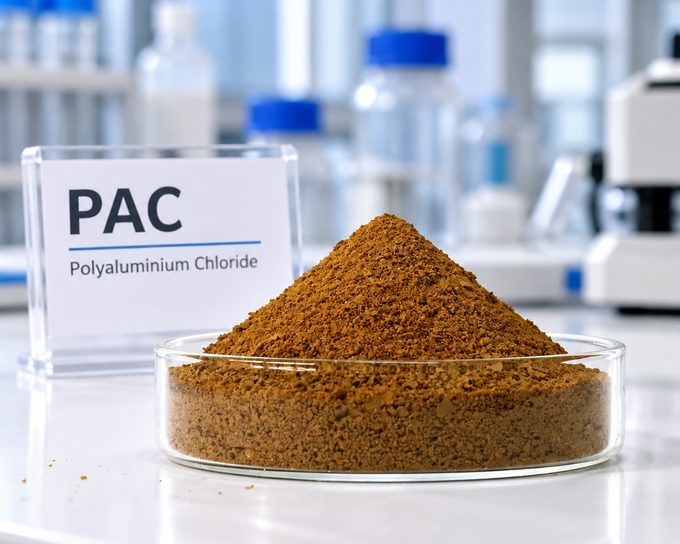
Anionic PAM can be worth evaluating for some sludge thickening duties, but it is not the automatic choice for municipal sludge. Meanwhile, cationic polymers are commonly screened for biological sludge conditioning. The correct choice depends on the actual solids, upstream chemistry and thickening equipment.
This article explains when to investigate anionic PAM for sludge thickening and how to compare it fairly. For example, a statement such as primary sludge or chemical sludge provides context, but it does not determine the required charge type by itself.
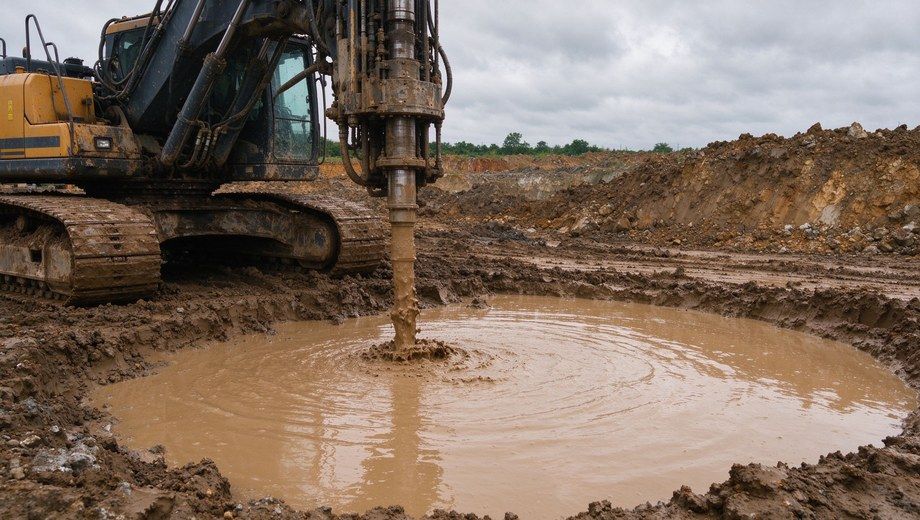
Define thickening separately from dewatering
Thickening raises the solids concentration while the material generally remains a slurry. Dewatering usually aims to produce a substantially drier material or cake. Therefore, a polymer that performs well on a dewatering machine may not be optimal at the thickening stage.
Identify whether the thickener uses gravity settling, flotation or mechanical separation. As a result, each arrangement imposes different requirements on aggregation, water release and floc strength. However, a settling cylinder can support screening without fully simulating every thickener.
The US EPA fact sheet on gravity thickening describes the process and its operating considerations. Gravity thickening information should not be treated as a complete design guide for flotation or mechanical systems.
Describe what is actually in the sludge
Record the sludge source, total solids, relevant organic and inorganic fractions, pH and prior treatment. In addition, note metal salt additions and changes in sludge age or production conditions. These details help explain why a previous polymer may no longer behave the same way.
Avoid assuming that all primary sludge is inorganic or that every chemical phosphorus removal sludge has the same surface properties. Both can vary substantially. Likewise, flotation identifies a separation process, not one consistent sludge composition.
Particle surfaces and dissolved constituents influence polymer adsorption. Consequently, a simple rule based on the sign of particle charge or the percentage of inorganic matter can be too narrow for real sludge.
Understand the role of anionic PAM
Anionic polyacrylamide-based products contain negatively charged groups. Many grades rely strongly on adsorption and bridging to connect suitable particles. However, charge density and molecular characteristics vary, and not every anionic formulation is made by the same route.
Prior chemical conditioning can alter the surfaces available for adsorption. In some chemically conditioned or mineral-rich streams, that may make anionic candidates relevant to a trial. It does not mean that a metal salt should automatically be added just to enable an anionic polymer.
Biological sludge often warrants cationic candidates in the screening plan. Nevertheless, the decision should come from measured separation and operating results, rather than declaring one type correct without comparison.
Build a screening plan with meaningful alternatives
Include the current accepted polymer program as a baseline where available. Select candidate charge types and several suitable grades within those types. Then test dose series using fresh, representative sludge and consistent preparation.
First, record whether the dose refers to supplied product or active polymer. For sludge work, normalize consumption to dry solids where appropriate so a change in feed concentration does not appear to be a change in polymer efficiency.
A unit example helps clarify the basis: 1 g of supplied product per kg of dry solids is the same mass ratio as 1 kg per metric ton of dry solids. This is a conversion, not a recommended dose. Active-polymer calculations also require the product’s active content.
Measure concentration and capture together
A more concentrated underflow is not automatically better if a substantial fraction of solids escapes in the return liquid. Evaluate both the thickened concentration and solids capture. Also account for the effect of the return stream on the rest of the plant.
Where measured flows and solids concentrations are available:
Solids capture = underflow dry solids mass rate ÷ feed dry solids mass rate × 100.
Use consistent units and a representative sampling period. Where flow varies, a single concentration reading cannot establish a complete mass balance.
| Trial measure | What it helps assess |
| Thickened solids concentration | Downstream volume and handling condition |
| Solids capture | Retention of feed solids |
| Return liquid quality | Solids loading returned to the plant |
| Polymer use per dry solids | Comparable consumption basis |
| Equipment behavior | Practical throughput and stability |
Validate the floc on the real thickener
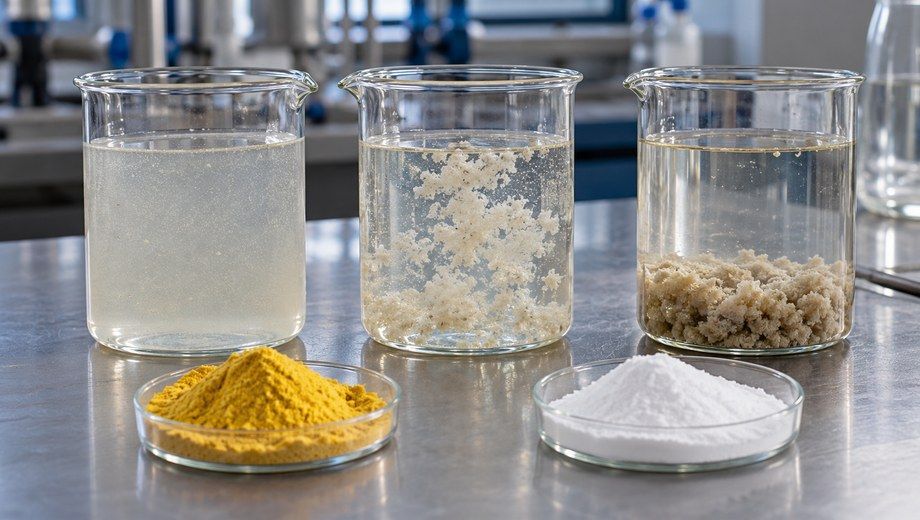
A supervised trial should test the actual mixing, pumping and separation conditions. Flocs that look large in a beaker may be fragile under plant shear. Conversely, a less dramatic visual result may deliver acceptable capture and throughput.
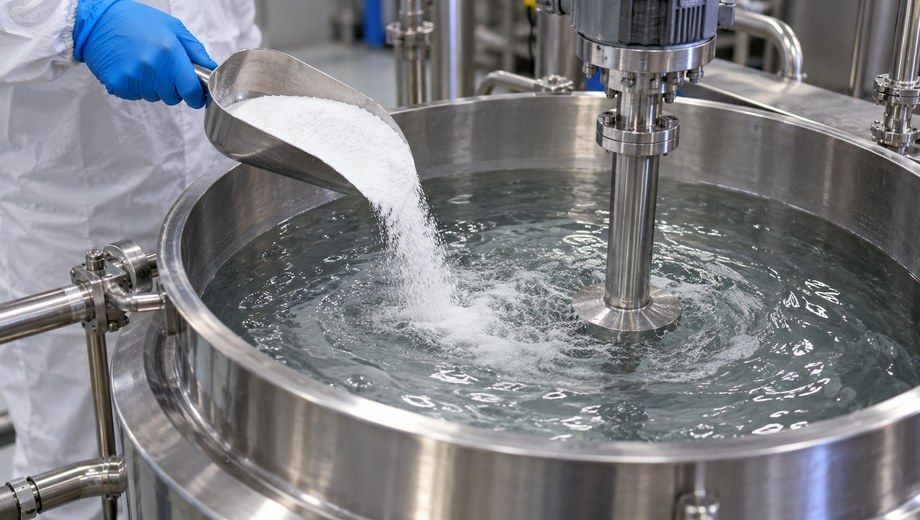
Check preparation quality before blaming the ionic type. Fish eyes, an incorrect stock concentration or inadequate activation can make a suitable grade appear ineffective. Seasonal variation may also require a new screening series.
Consider downstream digestion and dewatering as part of the review. Extra metal salts, polymer and changed return loads may affect other stages. Therefore, claim a plant-wide saving only after those consequences have been assessed.
Make a conditional selection decision
Choose an anionic grade when it meets the defined targets and operating constraints in representative trials. Choose another grade when it performs more reliably or economically. The objective is an effective thickening program, not proving one charge type superior.
KolinSC supplies different PAM ionic types. Send the sludge profile, thickener type, baseline program and trial results when requesting product information for evaluation.
Professional Water Treatment Chemical Supplier & One-Stop Industrial Solution Provider