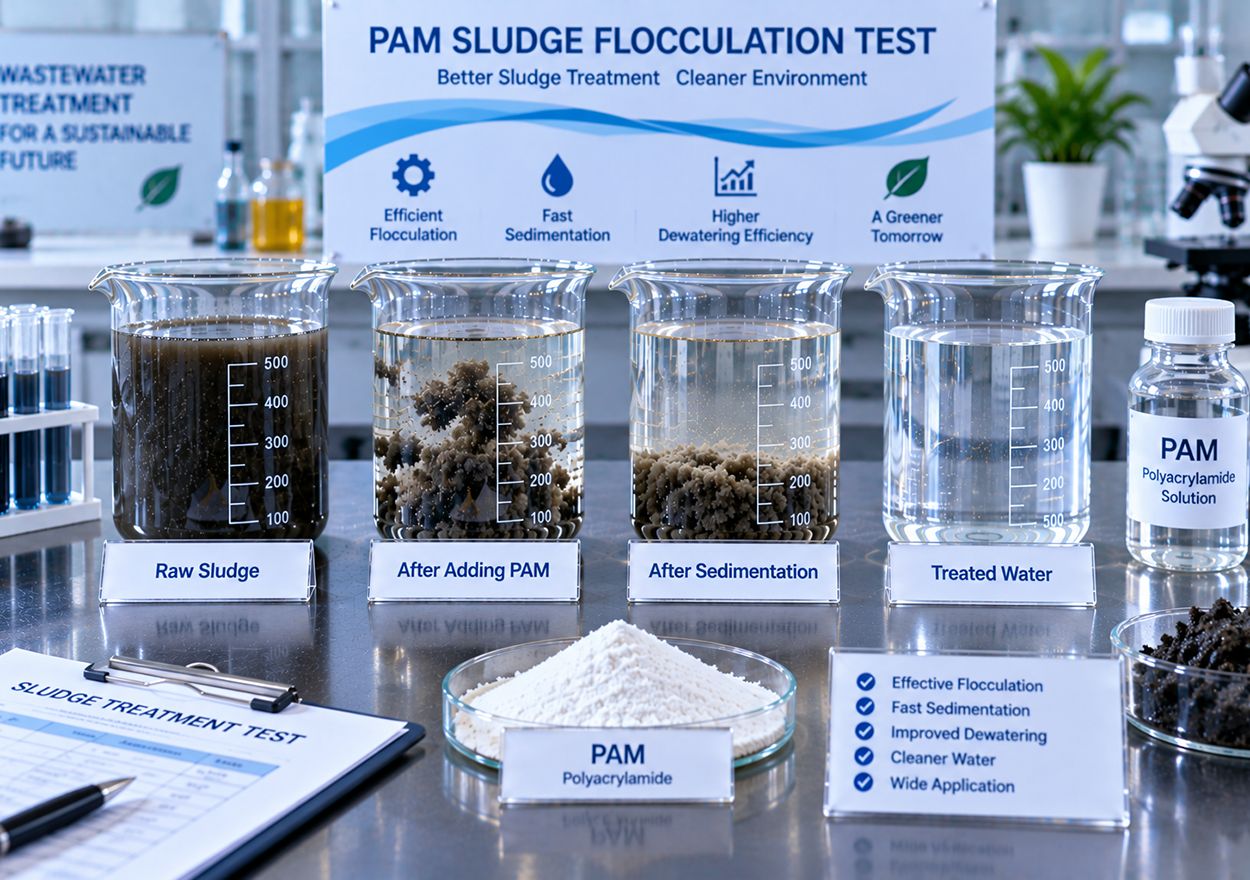
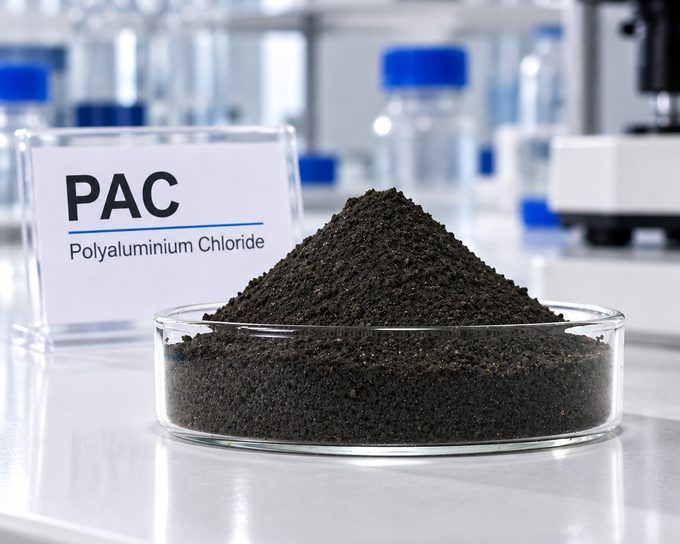
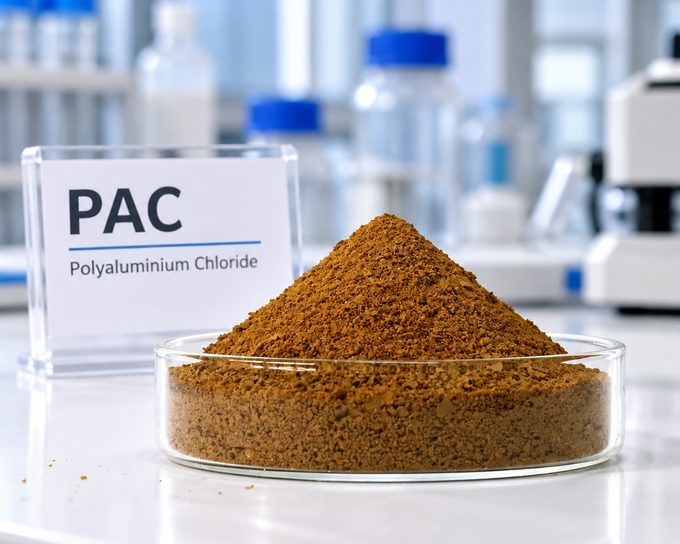
PAC and PAM are often evaluated together because they address different parts of particle separation. PAC can destabilize colloids and support the formation of initial aggregates. A suitable PAM grade can then help those particles form flocs that the separation equipment can handle more effectively.
However, using PAC and PAM in water treatment is not a fixed recipe. Some streams need a coagulant without a polymer, while others respond to polymer treatment without added PAC. The decision should follow the separation objective and trial evidence.
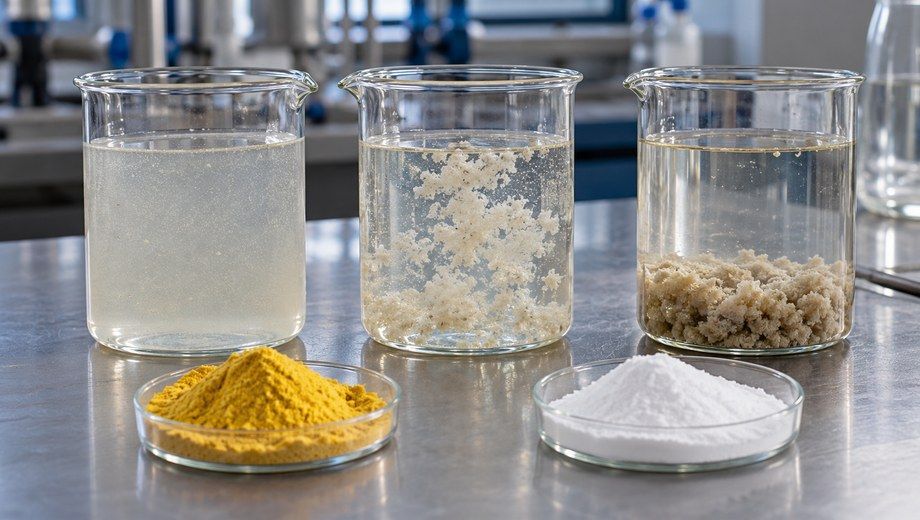
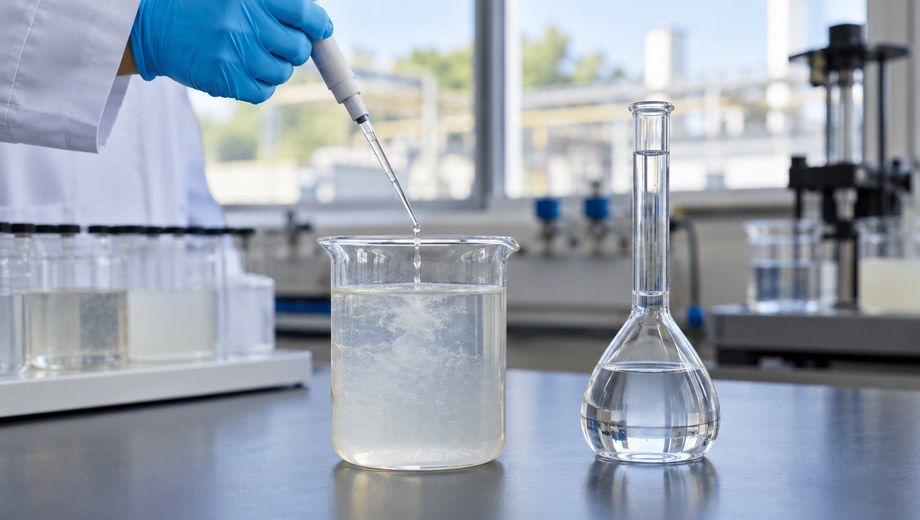
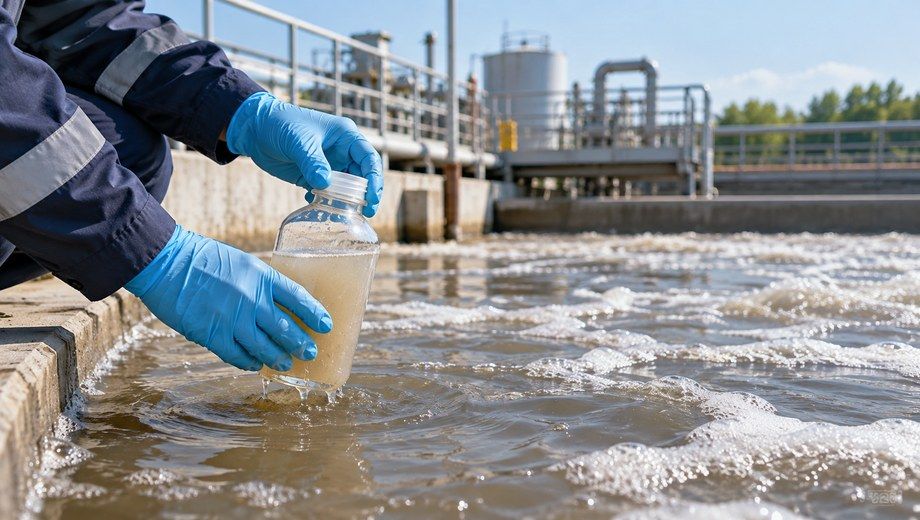

Coagulation and flocculation have different jobs
The distinction is useful operationally. If particles remain inadequately destabilized, adding more polymer may not solve the underlying coagulation problem. Conversely, an acceptable coagulant program may still benefit from a suitable polymer when the resulting solids are difficult to separate.
Why addition timing can change the result
A common starting sequence is PAC addition with rapid dispersion, followed by PAM at an appropriate stage of flocculation. This gives the coagulant an opportunity to interact with the water before polymer bridging is evaluated.
Nevertheless, timing must reflect the actual process. Addition points, available contact time and mixing conditions vary between clarification, flotation and sludge treatment. Test the sequence instead of assuming the same spacing is suitable everywhere.
Prepare and feed the chemicals separately unless a validated product or process explicitly requires something different. Combining concentrated products in a storage or preparation tank is not equivalent to applying them at controlled points in the water stream. It can create compatibility and preparation problems.
Match flocs to the separation equipment
For sedimentation, settling behavior and clarified water quality are important. In contrast, flotation depends on how conditioned particles interact with bubbles and the flotation process. Filtration has its own requirements for particle capture and filter operation.
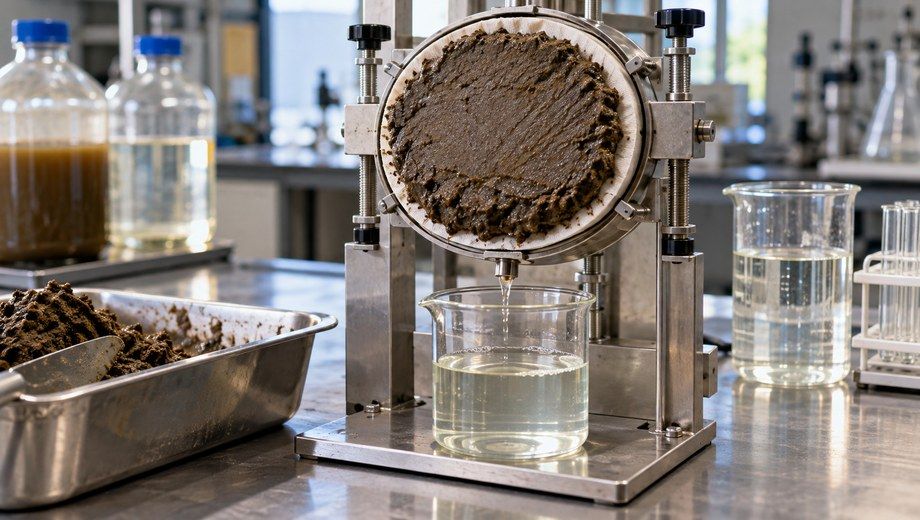
Sludge conditioning is another distinct duty. A polymer selected for clarification is not automatically optimal for a centrifuge or belt press. Therefore, evaluate floc properties under the shear and separation conditions the material will actually encounter.
The US EPA technical guidance on turbidity and treatment discusses coagulation within a complete drinking water treatment process. Its scope should not be confused with a universal industrial wastewater formulation.
Select the polymer after describing the solids
Anionic, cationic, nonionic and amphoteric PAM products can behave differently in the same treatment stream. Charge density and molecular characteristics also vary within each type. Consequently, a grade name alone provides limited selection information.
Describe the solids source, pH, concentration and chemicals already added. For example, mineral suspensions and biological sludge may require different screening plans. Upstream coagulation can also change the surfaces with which the polymer interacts.
Check preparation requirements as part of selection. A product that performs well only under preparation conditions the site cannot maintain may be a poor operating choice.
Diagnose weak performance by treatment stage
| Observation | Conditions worth investigating |
| Cloudy water after treatment | Coagulant conditions, polymer suitability and separation performance |
| Flocs grow and then break | Mixing, downstream shear and grade selection |
| Increased consumption without improvement | Dose basis, preparation quality, water changes and overdosing |
| Good settling but dissolved contamination remains | Whether the contaminant requires a different removal process |
These observations are investigation prompts rather than proof of one cause. For instance, cloudy supernatant may arise from unsuitable chemistry or from inadequate settling time. A controlled comparison is more informative than changing several settings simultaneously.
Evaluate each chemical contribution
Begin with a baseline treatment and a coagulant-only series where appropriate. Then evaluate polymer addition under controlled PAC conditions. Include repeat trials so one favorable jar does not determine the entire program.
Record dose on a defined basis and compare the endpoint that matters to the plant. Chemical cost, pH adjustment, sludge handling and preparation costs should be included when alternatives perform acceptably. As a result, a higher unit-price product may still be economical, but that conclusion needs measured dose and operating data.
Understand what the combination cannot establish
PAC and PAM can support removal of suitable suspended and colloidal material. They do not automatically remove all dissolved salts, every dye or all organic contaminants. A treatment result for one water sample cannot establish complete pollutant removal across an industry.
Likewise, a successful jar test does not demonstrate compliance with every permit or drinking water requirement. The chemical grade, use conditions and final water quality need separate assessment.
When discussing the combination with KolinSC, provide the treatment stage, existing chemicals and results you want to improve. That information helps focus the comparison on available PAC and PAM grades rather than a predetermined ratio.
Professional Water Treatment Chemical Supplier & One-Stop Industrial Solution Provider