Potassium alum is one of those ingredients that divides consumers. Aficionados love it as a minimalist mineral astringent; dermatologists caution against over-claiming. For formulators, the honest position sits between the two: alum is a useful functional mineral with a long history, not a treatment.
What It Actually Does
When dissolved, potassium alum releases aluminum ions that interact with skin-surface proteins. The result is a temporary tightening, drying sensation — the classic astringent feel. That is the entire mechanism. It is not an antibiotic, not an oil-stripper, and not a proven acne treatment.
Typical products built around this effect:
- Crystal deodorants and mineral sticks
- Underarm and foot-care products
- Astringent toners and after-shaves
- Traditional mineral powders
On Acne-Prone Skin — Read This Carefully
You will see alum marketed online as an acne fighter. The clinical evidence does not support that claim. Acne is driven by sebum, follicular blockage, Cutibacterium acnes, and inflammation — not by surface dryness.
Consequently, formulators should not put these claims on packaging:
- “Treats acne”
- “Kills acne bacteria”
- “Unclogs pores”
- “Stops breakouts”
What you can say is cosmetic: a clean, dry, astringent sensory profile.
Picking a Grade
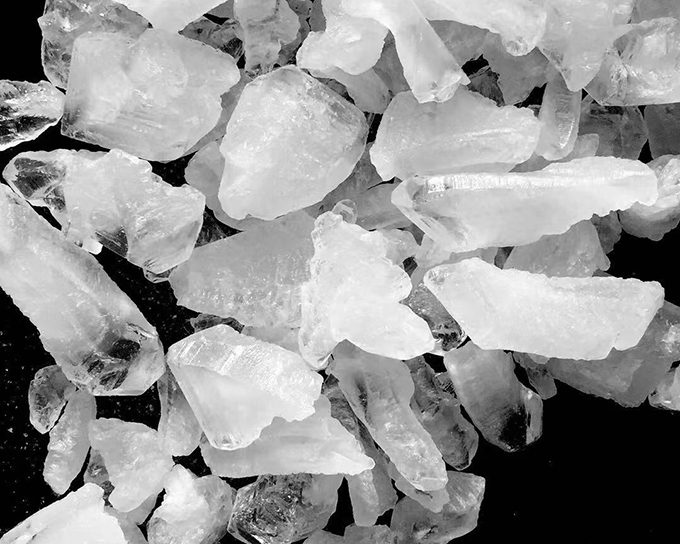
Not all alum is interchangeable. Industrial alum, water-treatment alum, and cosmetic alum differ in purity, heavy-metal limits, and appearance. For skin-care work, buyers should specify:
| Parameter | Why it matters |
|---|---|
| Purity / heavy-metal limits | Cosmetics regulation |
| Crystal clarity and size | Visual appeal of deodorant stones |
| Particle size (powder) | Dispersion in formulations |
| Solubility | Finished-product behavior |
| COA / SDS / TDS | Incoming-quality control |
Clay Blends — Proceed With Testing
Alum and cosmetic clay both appear in “purifying” concepts. They can coexist, but the combination needs compatibility, pH, and stability testing — do not assume two minerals automatically play well together.
A Note on Over-Exfoliation
The American Academy of Dermatology reminds us that aggressive exfoliation damages the skin barrier. An alum crystal rubbed hard over active breakouts is not a routine. Formulations should be designed around gentle, occasional use.
FAQ
Can I put raw alum on a pimple? Don’t. Concentrated mineral on inflamed skin can irritate. Use a formulated product, and see a dermatologist for persistent acne.
Is alum better than aluminum chlorohydrate? They are different ingredients. Alum is a salt used in deodorants; aluminum chlorohydrate is the active in most antiperspirants. Different regulatory categories.
What form sells best? Crystal and block for premium deodorant stones; powder for liquid or powder formulations.
Disclaimer
Raw-material formulation guidance only. Not medical advice. Comply with target-market cosmetics regulation.
Conclusion
Potassium alum earns its place in skin care as a clean, mineral astringent — not as an acne treatment. Formulators who respect that boundary, and who specify the right grade, get a simple, on-trend ingredient with a centuries-long track record.
Professional Water Treatment Chemical Supplier & One-Stop Industrial Solution Provider