Clear crystals and a high purity figure can make potassium alum look convincing. However, neither tells the complete quality story. A useful evaluation of potassium alum quality connects the chemical identity, analytical method and physical form to the intended application.
Before placing a bulk order, agree on what the product must meet and how that will be verified. The following five questions help turn a general quality claim into an assessable purchase specification.


Does the identity match the material you need
Confirm potassium aluminum sulfate dodecahydrate, KAl(SO₄)₂·12H₂O, when that is the required compound. The full name matters because “alum” may also refer to ammonium alum or, in some water treatment markets, aluminum sulfate.
Compare the name on the quotation, TDS, SDS and COA. In addition, check the physical form and batch identification. An inconsistency should be resolved before the shipment is accepted.
The PubChem potassium alum identity record is a useful reference for chemical naming. Nevertheless, the commercial specification must describe the actual supplied product.
What does the assay result measure
An assay should identify its calculation basis and analytical method. A result for potassium alum dodecahydrate is different from a result expressed as aluminum or Al₂O₃ equivalent. Consequently, two figures called “purity” may not be directly comparable.
The dodecahydrate contains water of crystallization as part of its chemical structure. Free moisture is a separate concept. Heating under a particular test procedure may affect crystallization water, so a loss-on-drying result cannot automatically be interpreted as free moisture.
Ask the supplier to define the moisture or drying method before using the result as an acceptance limit. This avoids rejecting suitable material or accepting an ambiguous certificate.
Which impurities matter for the application
Water-insoluble matter can be relevant where solution clarity and residue are important. Depending on the application, buyers may also need limits for iron, other metals, ammonium or additional specified impurities.
Set these limits from the required standard or customer specification. A long COA is not necessarily better if it omits the actual acceptance criteria. Conversely, a short routine COA may need supplementary testing for a particular use.
Where a report states “not detected,” request the detection or reporting limit and the method. That result means the analyte was below the method’s stated capability under the test conditions; it does not prove absolute absence.
For food, pharmaceutical or cosmetic supply, define the applicable requirements separately. A generic high-purity label does not establish conformity with a complete pharmacopoeial monograph or another regulated specification.
Does the physical form fit the purchase specification
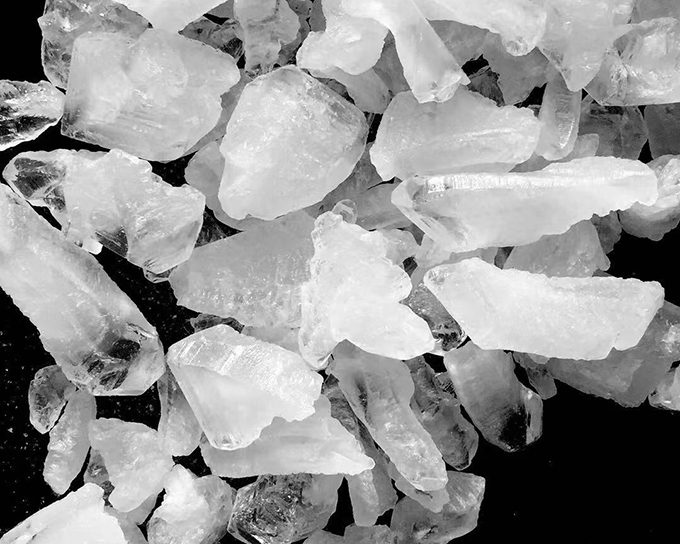
For powder, review particle size, condition after transport and behavior during preparation. For blocks, assess the agreed dimensions, physical integrity and acceptable breakage. Crystal transparency may matter commercially, but it does not replace impurity analysis.
Inspect a representative sample using a documented procedure. For instance, a dissolution check should state the quantity, water volume, temperature and mixing conditions. As a result, later shipments can be compared against the same reference.
Can the delivery be traced and checked
A batch COA should contain an identifiable lot number, test results, units and the relevant limits. Bag labels and shipment records should link to that batch. Also confirm how the supplier manages a quality complaint or a disputed result.
| Before ordering | Before shipment | On receipt |
| Agree identity, grade and test basis | Review the shipment batch COA | Match labels and documents |
| Define impurity and physical limits | Confirm packaging and lot details | Inspect packaging and physical condition |
| Evaluate a representative sample | Agree any additional testing | Retain a sample if required by the quality plan |
Where independent testing is needed, select a laboratory with suitable methods. The ISO overview of testing laboratory competence explains the purpose of ISO/IEC 17025. Review the laboratory’s relevant scope rather than relying on an accreditation logo alone.
Put the acceptance criteria in writing
Document the required assay, impurity limits, physical form, packaging and test methods. Then agree how sampling, retesting and nonconforming material will be handled. This provides a practical basis for consistent future supply.
Send KolinSC your application and acceptance specification when requesting potassium alum. Include any named standard and its edition so the available product documentation can be checked against the actual requirement.
Professional Water Treatment Chemical Supplier & One-Stop Industrial Solution Provider