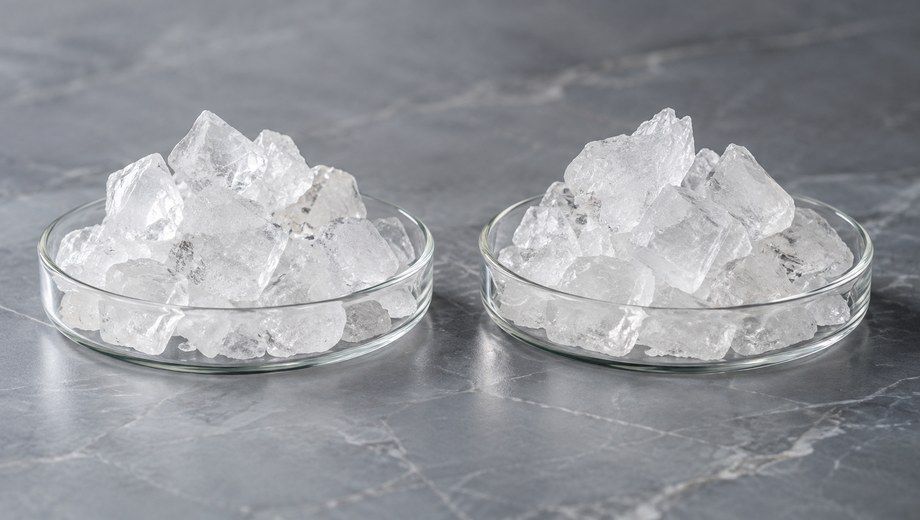
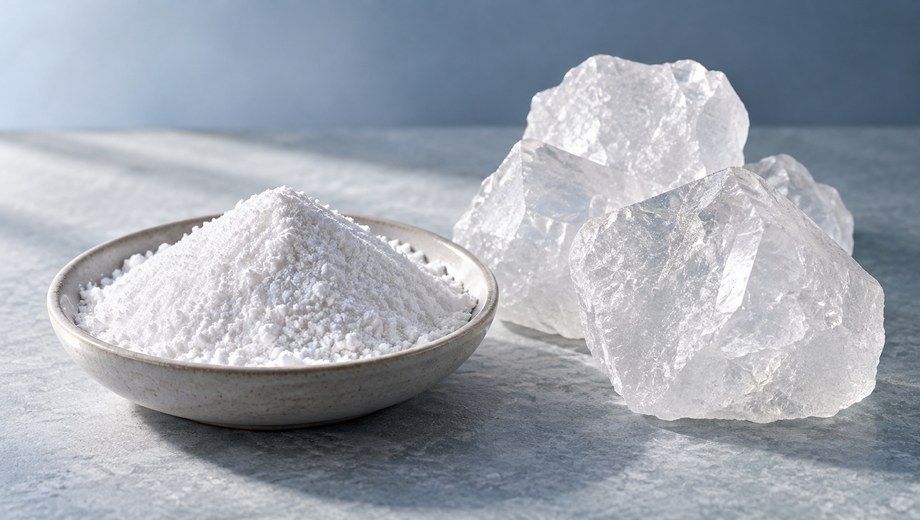
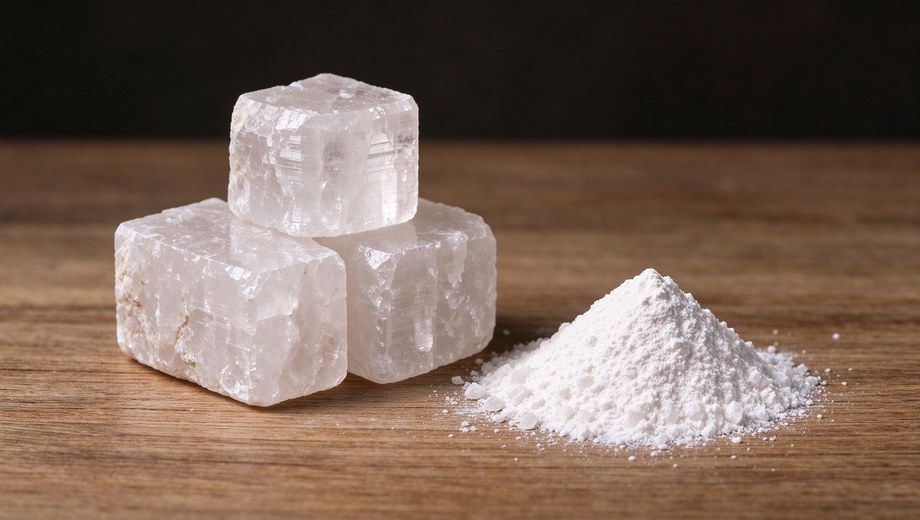
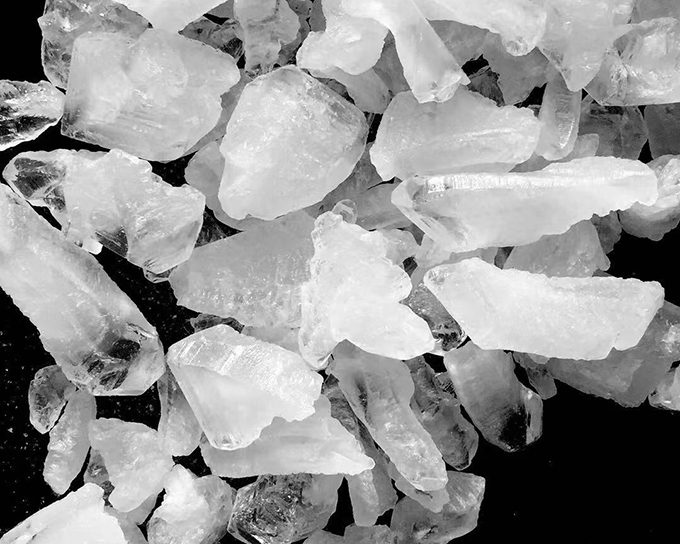
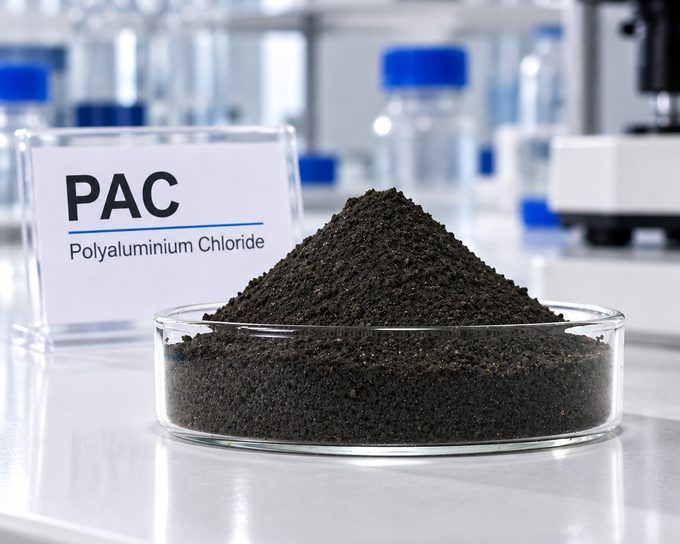
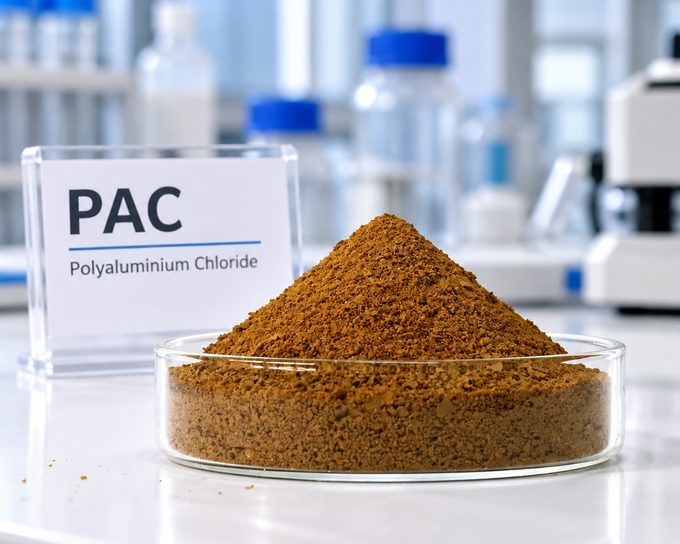
A process can operate without PAM when another treatment arrangement consistently meets its required separation and operating targets. That does not mean potassium alum reproduces the chemistry of a polymer flocculant. The useful question in potassium alum vs PAM is whether the process still needs a separate polymer function.
This distinction matters when a plant wants to simplify preparation or reduce chemical consumption. However, removing one product from the dosing list is beneficial only if the complete treatment remains reliable and economical.
Confirm which alum is being discussed
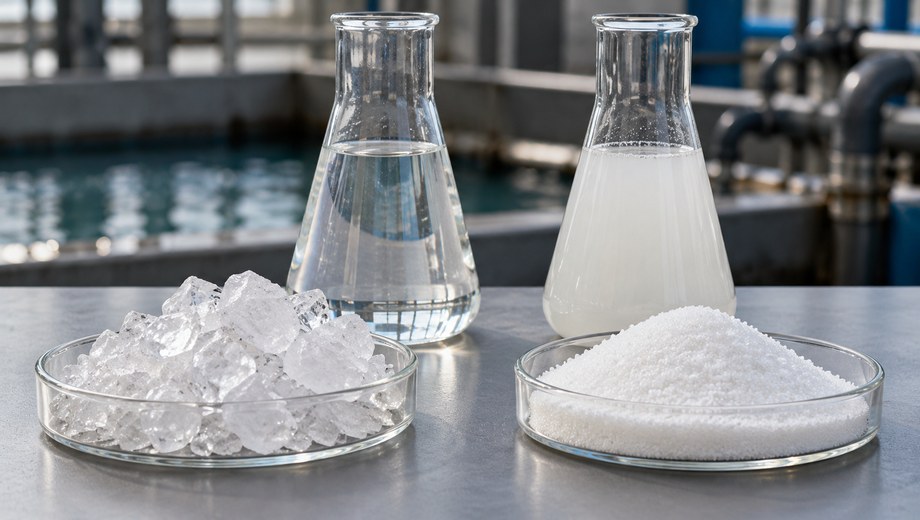
In many water treatment references, alum means aluminum sulfate. Here, potassium alum means potassium aluminum sulfate dodecahydrate, KAl(SO₄)₂·12H₂O. Ammonium alum is a related but different compound and introduces an additional nitrogen-containing component.
These chemicals should not be treated as equivalent quantities merely because they all contain aluminum. Concentration, accompanying ions, alkalinity effects and the selected working dose differ.
Likewise, PAM covers products with different ionic and molecular characteristics. A conclusion about one tested polymer does not establish that every PAM grade is unnecessary.
Compare functions rather than equal product weights
Aluminum salts can destabilize particles and form aluminum-containing solids under suitable conditions. PAM can promote aggregation through adsorption, bridging and charge-related interactions, depending on the grade and solids.
Those functions sometimes overlap in the operating result. A coagulant may produce flocs that the separator handles adequately without extra polymer. In another process, polymer-assisted growth or conditioning may be essential to the required throughput and capture.
Therefore, increasing alum dose is not a direct way to reproduce long-chain polymer behavior. It may instead add more dissolved ions, acidity or sludge without restoring the lost separation performance.
Identify what the existing polymer is doing
Review the current addition point and the reason PAM was selected. Is it helping fine solids settle, improving flotation, protecting capture under high loading, or conditioning sludge before a dewatering machine?
For clarification with sufficient separation capacity, an alum-only trial may be reasonable where evidence supports it. However, a treatment that settles acceptably in a long laboratory test may fail at the plant’s shorter available time.
Mechanical dewatering deserves separate assessment. Sludge conditioning often depends on polymer properties that a coagulant does not duplicate. A clarification result cannot establish that a centrifuge or belt press can run equally well without its polymer.
| Duty | Main question before removing PAM |
| Settling clarification | Can the floc meet the required quality and hydraulic loading |
| Flotation | Does the actual flotation process retain solids effectively |
| Filtration | Are capture, filter operation and maintenance acceptable |
| Sludge dewatering | Are solids capture, cake condition and throughput maintained |
Establish a controlled baseline
First, record incoming water or sludge, doses, preparation, reaction pH, mixing and achieved results. In addition, check pump delivery and dose basis so the baseline describes what actually happens, not only the nominal setting.
Also include the relevant separation measurements. Turbidity can be useful for clarification, while solids capture and cake condition may matter for dewatering. Where dissolved pollutants are important, measure them separately.
The US EPA treatment guidance library offers background on coagulation and treatment evaluation in its drinking water context. It does not establish that potassium alum can replace a polymer in a particular wastewater process.
Test alternatives without changing every variable at once
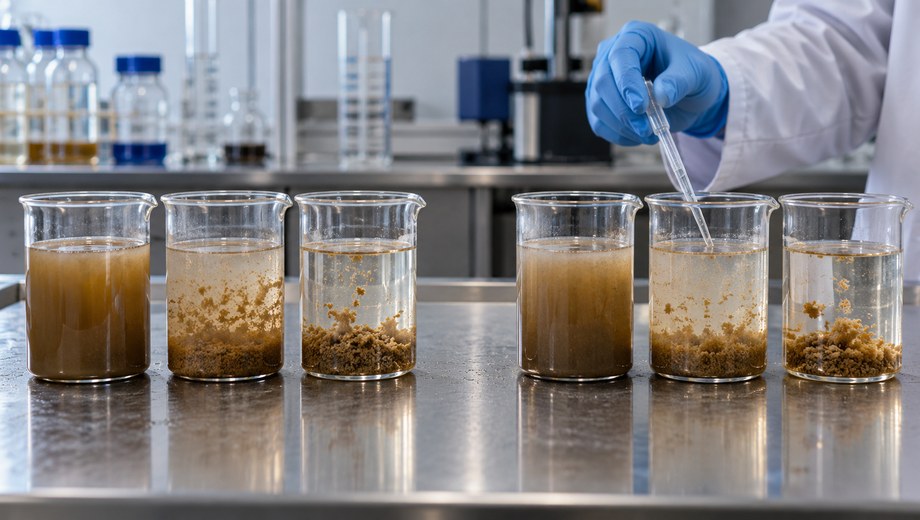
Compare the accepted program with technically justified alternatives. These may include coagulant-only, polymer-only or combined treatments where appropriate. Use representative material, repeat trials and retain the same documented separation procedure.
If pH adjustment is part of a trial, include the controls needed to identify its contribution. Otherwise, changes caused by precipitation can be incorrectly attributed to the coagulant or polymer.
Then optimize the promising alternative rather than rejecting it at one arbitrary dose. Equally, do not give it an unrealistic settling time or mixing arrangement that the operating plant cannot provide.
Count the consequences beyond chemical price
Compare cost per treated volume or dry-solids basis as appropriate. Include preparation, pH adjustment, energy, labor, sludge management and any change in equipment loading. A lower PAM bill can be offset by increased alum use or reduced throughput.
Meanwhile, potassium alum adds potassium, sulfate and aluminum-related material to the treatment system. Where ammonium alum is considered instead, include its ammonium-nitrogen contribution. Neither alternative should be evaluated as though it adds only useful aluminum.
PAM products may have residual monomer specifications relevant to particular applications. Removing the polymer eliminates that input, but it does not automatically establish lower overall environmental impact. The complete alternative still requires assessment.
Demonstrate reliability under normal variation
However, a successful jar is a screening result. Validate the revised program against actual flow, solids variation, temperature and equipment shear. Where appropriate, use a supervised pilot or plant trial before making a lasting change.
Monitor the return streams and sludge as well as the visible effluent. An apparently clear water result may conceal poorer solids capture or a downstream handling problem. Consequently, acceptance criteria should be set before the trial, not selected after observing the most favorable measurement.
Make the decision from the required outcome
Retain PAM where it provides a necessary or worthwhile process benefit. Reduce or remove it only when a validated alternative meets the complete requirements with acceptable operating robustness. There is no need to declare one chemical universally superior to make that decision.
Technical note: This article describes an evaluation strategy rather than a replacement recipe. No fixed alum-to-PAM ratio or industrial chemical grade can establish treatment suitability without application-specific evidence.