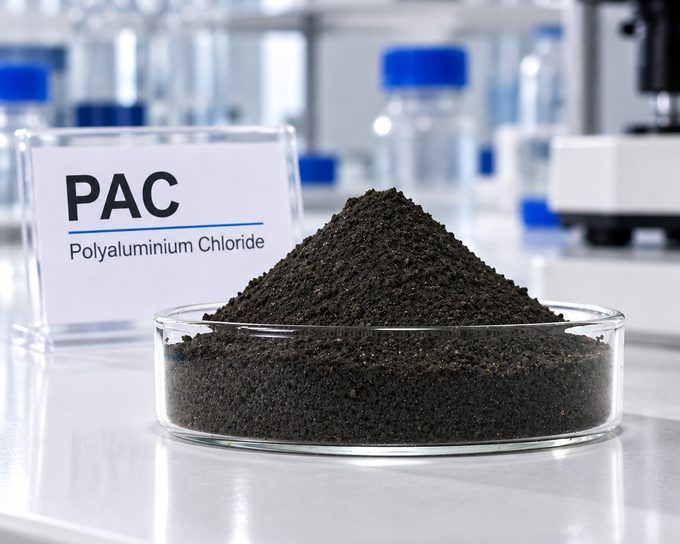
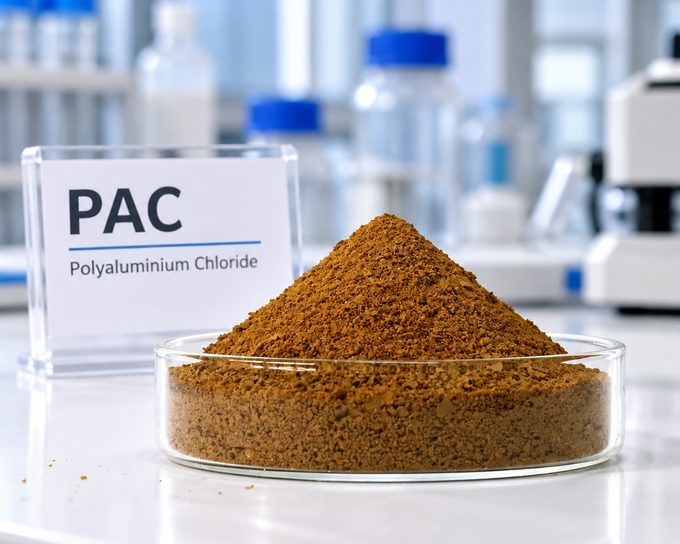
Alum, PAC, and PAM are the three most-cited chemicals in water treatment. Nevertheless, they do not do the same job. Treating them as interchangeable causes over-dosing, weak flocs, slow settling, and wasted money.
The rule is simple:
Alum / PAC → coagulation (destabilization). PAM → flocculation (floc growth).
Terminology First
In water treatment, “alum” usually means aluminum sulfate in industry. Potassium alum (KAl(SO₄)₂·12H₂O) is a different product with related but not identical chemistry. Confirm exactly which chemical you are buying.
Core Differences
| Chemical | Type | Primary function |
|---|---|---|
| Alum / aluminum sulfate | Inorganic coagulant | Particle destabilization |
| PAC | Polymeric inorganic coagulant | Destabilization + faster, wider-pH floc formation |
| PAM | Polymeric flocculant | Bridging destabilized particles into large flocs |
How Coagulation and Flocculation Work Together
Suspended particles are tiny and charge-stabilized. Standing alone, they barely settle.
- Coagulation — alum or PAC is rapidly mixed. Aluminum species neutralize particle charges.
- Flocculation — PAM adsorbs and bridges the now-destabilized particles into large flocs.
- Separation — flocs settle, float (DAF), or are filtered.
Alum vs PAC: Which Coagulant?
| Alum / aluminum sulfate | PAC | |
|---|---|---|
| Cost | Usually lower | Often higher purchase price |
| pH flexibility | Narrower; consumes alkalinity | Broader; pre-hydrolyzed |
| Floc speed | Slower | Faster |
| Best fit | Conventional, low-cost plants | Compact plants, variable raw water |
Neither is universally better. Choose by jar test.
PAM Is Not a Stronger Coagulant
If the primary coagulant is wrong, more PAM will not fix it. Troubleshoot in this order:
- Poor clarification → check coagulant dose and pH
- Weak microflocs → re-screen polymer
- Poor dewatering → match polymer to the machine
When to Use All Three
There is usually no reason to use alum and PAC at the same time. Pick one coagulant. Add PAM only when floc growth needs help. Use the minimum number of chemicals that meets the target.
PAM Type by Job
| Job | Start with |
|---|---|
| Mineral / high-turbidity water | Anionic PAM |
| Biological / municipal sludge | Cationic PAM |
| Acidic or specialty streams | Nonionic PAM |

A Practical Starting Guide
| Challenge | Try first | Possible pair |
|---|---|---|
| General clarification | PAC or alum | + PAM |
| High turbidity | PAC or alum | + anionic PAM |
| Mining / sand washing | PAC or alum | + anionic PAM |
| Municipal sludge dewatering | — | Cationic PAM |
| Simple low-demand water | Coagulant alone | — |
This is a starting point, not a recipe. Always confirm by jar test.
FAQ
Can I replace alum with PAC directly? Often yes, but not drop-in — dose, pH, and alkalinity consumption differ. Jar test both.
Is PAM a coagulant? No. PAM is a flocculant. It needs destabilized particles to work on.
Do I need all three? Usually not. One coagulant plus, if needed, one PAM grade is enough.
Conclusion
Alum, PAC, and PAM are complementary, not interchangeable. Pick the right coagulant for your water, add PAM only when flocs need strengthening, and optimize everything by jar test. The cheapest treatment is the one that hits target effluent with the lowest total cost.
Not sure which chemical fits? Send us your water analysis →
References: