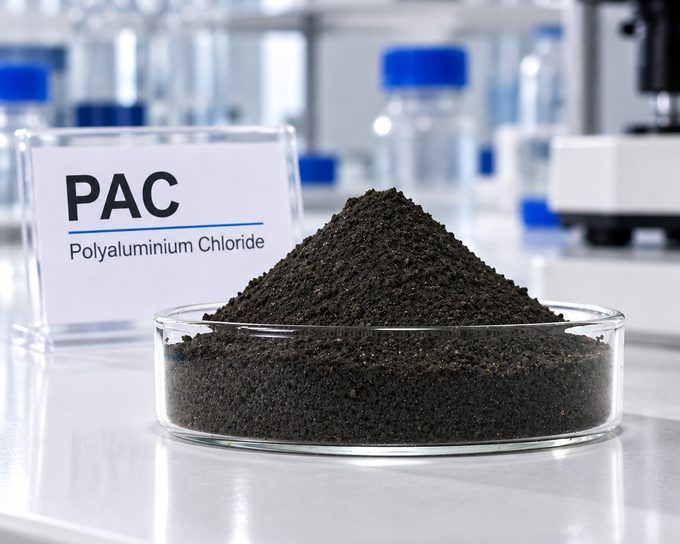
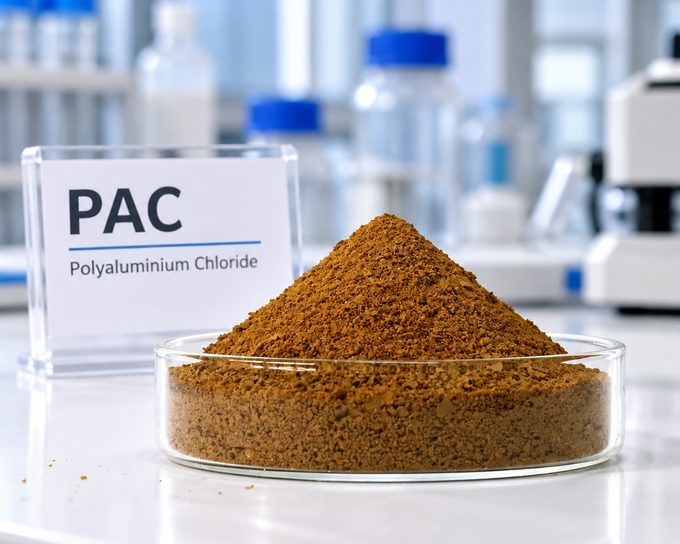
Mining and mineral processing produce huge volumes of wastewater loaded with tailings fines, metal hydroxide colloids, clay, residual flotation reagents, and dissolved salts. The water is often highly turbid, pH-shifting, and variable from shift to shift.
For that reason, alum remains one of the most practical and economical pretreatment coagulants available.
Why Mining Water Is Hard
Fine tailings particles are tiny and charge-stabilized. Left alone, they stay suspended for days. If discharged, they cloud rivers; if recirculated, they wear pumps and interfere with process water. Typical contaminants include:
- Tailings fines and ore dust
- Clay, silt, and mineral particles
- Metal hydroxide colloids
- Residual flotation reagents
- Dissolved salts and metals
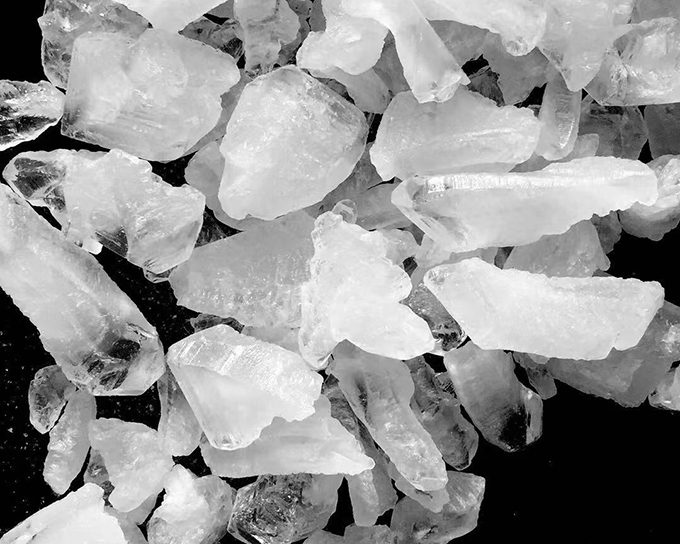
How Alum Works
- Charge neutralization — hydrolyzed aluminum neutralizes negative particle surfaces.
- Sweep flocculation — aluminum hydroxide precipitates enmesh fines.
- Floc growth and settling — gentle mixing builds large flocs that clarify quickly.
Consequently, suspended solids and turbidity drop dramatically before downstream treatment or reuse.
Typical Mining Water Flow
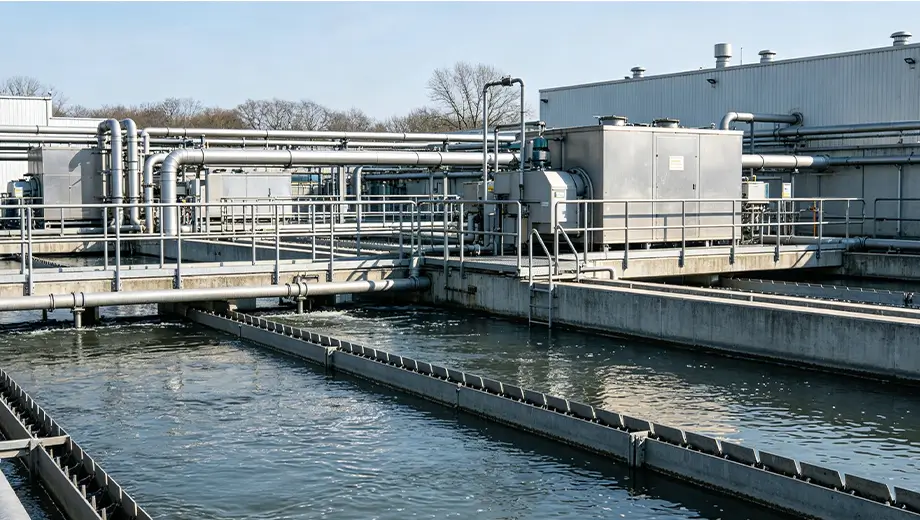
Collection → Screening / grit removal → Equalization → Alum coagulation → Flocculation → Sedimentation → Advanced treatment or reuse
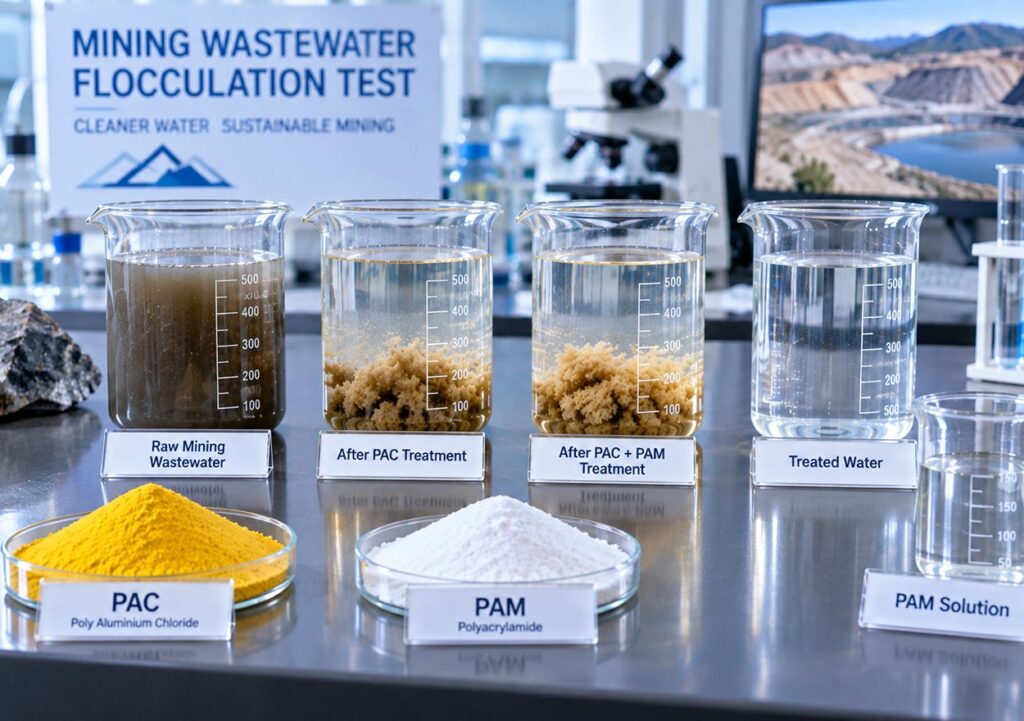
Equalization matters because mining load swings with production and rain. After screening, alum is dosed and rapidly mixed; PAM is commonly added to build stronger flocs. Clarified water may be reused in the plant or polished further for discharge.
Alum + PAM
Mining streams are the textbook case for alum + PAM:
Alum destabilizes fines → PAM bridges → large dense flocs → fast settling
The anionic PAM grade is the usual starting point for mineral solids. Set both doses by jar test.
What Alum Removes — and What It Does Not
Alum removes particulate and colloidal load: tailings fines, clay, turbidity, and metals bound to particles. Nevertheless, dissolved heavy metals and dissolved salts are not removed by coagulation alone. For those, add chemical precipitation, adsorption, membranes, or ion exchange downstream.
Advantages
- Low chemical cost at the very large volumes mines handle
- Simple dosing with conventional equipment
- Effective on high-turbidity tailings water
- Pairs naturally with PAM
- Conditions water for reuse and downstream polishing
Limitations
- pH sensitive — extreme acid or alkali needs adjustment first
- Does not remove dissolved metals
- Generates chemical sludge that must be managed
- No universal dose — optimize by jar test
Supporting Water Reuse
Modern mining operates under growing water-stress pressure. By clarifying tailings water, alum pretreatment prepares the stream for recycling back into ore processing. As a result, mines withdraw less fresh water and discharge less contaminated effluent.
FAQ
Does alum treat acid mine drainage? Partially. It removes suspended solids, but acid and dissolved metals need pH neutralization and chemical precipitation first.
Which PAM works with alum in mining? Usually anionic PAM for mineral particles. Confirm by jar test.
Can clarified mine water be reused? Often yes, depending on the end use and local discharge rules.
Conclusion
Alum is a low-cost, robust pretreatment for mining and tailings wastewater — especially when paired with anionic PAM. It clarifies the fines that would otherwise foul pumps and rivers, and it prepares water for the more demanding treatment steps that dissolved metals require.
KolinSC supplies alum and PAM for mining and mineral-processing water. Talk to our engineers →
References: