Natural organic matter and its disinfection by-products (DBPs) are critical considerations in drinking water treatment. Natural organic matter (NOM) is the mix of decaying plant material, soil humus, algae, and biological residues that is naturally present in rivers, lakes, and reservoirs. By itself it is not usually a direct health hazard. Its problem is chemical: when chlorine and other oxidants react with NOM, they form disinfection by-products (DBPs).
The operator’s challenge is to disinfect water for safety and keep DBP levels down — two goals that pull in opposite directions.
What Is NOM?
NOM is a complex mixture of humic and fulvic acids, proteins, carbohydrates, and other organic compounds. Utilities track it with:
- TOC (total organic carbon)
- DOC (dissolved organic carbon)
- UV absorbance / SUVA
It varies by season, rainfall, watershed vegetation, and algal activity.
What Are DBPs?
When chlorine, chloramine, ozone, or chlorine dioxide reacts with NOM, organic molecules transform. Common regulated DBPs:
- Trihalomethanes (THMs) — e.g., chloroform
- Haloacetic acids (HAAs)
- Nitrogen-containing DBPs — when organic nitrogen is present
- Brominated DBPs — when bromide is in source water
Formation depends on NOM concentration and character, disinfectant type and dose, contact time, pH, temperature, and bromide.
The Treatment Dilemma
You cannot skip disinfection — pathogens have to be inactivated. But you also cannot dose chlorine without regard to NOM, or DBPs rise. The answer is to reduce NOM before disinfection and then optimize the disinfection step.
Removing NOM Before Disinfection
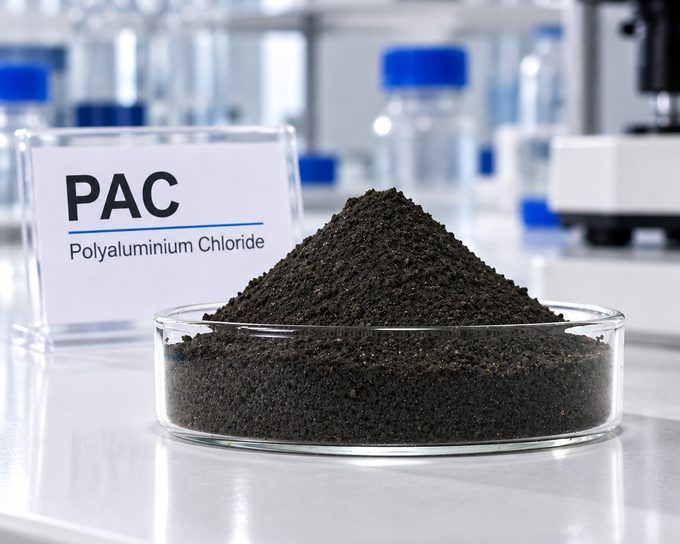
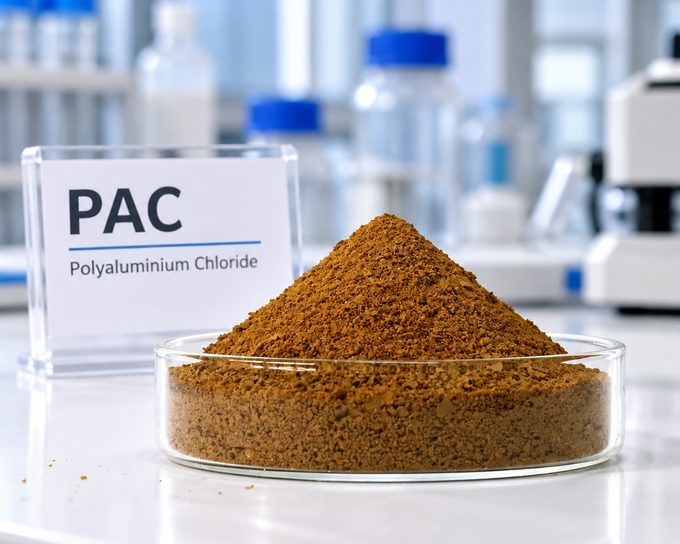
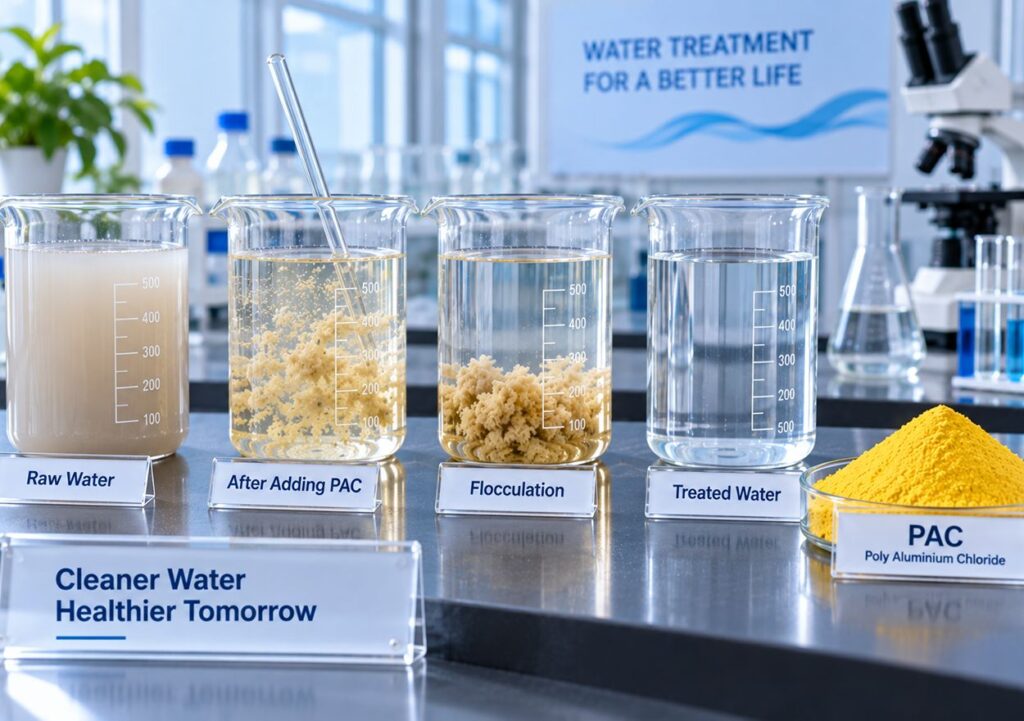
Coagulation with PAC
Jar testing is essential because optimal NOM removal (often called enhanced coagulation) depends on pH, temperature, and alum dose.
Coagulation does not remove small hydrophilic NOM molecules — those need polishing.
Advanced Treatment
- Activated carbon (powdered or granular) adsorbs the smaller, more hydrophilic fraction.
- Ozone + biological activated carbon (O₃/BAC) — ozone breaks large molecules; the BAC filter then consumes them.
- Membranes — nanofiltration and reverse osmosis remove dissolved organics at higher cost.
Optimizing the Disinfection Step
- Lower NOM into the contact chamber in the first place.
- Tune disinfectant dose, contact time, pH, and temperature.
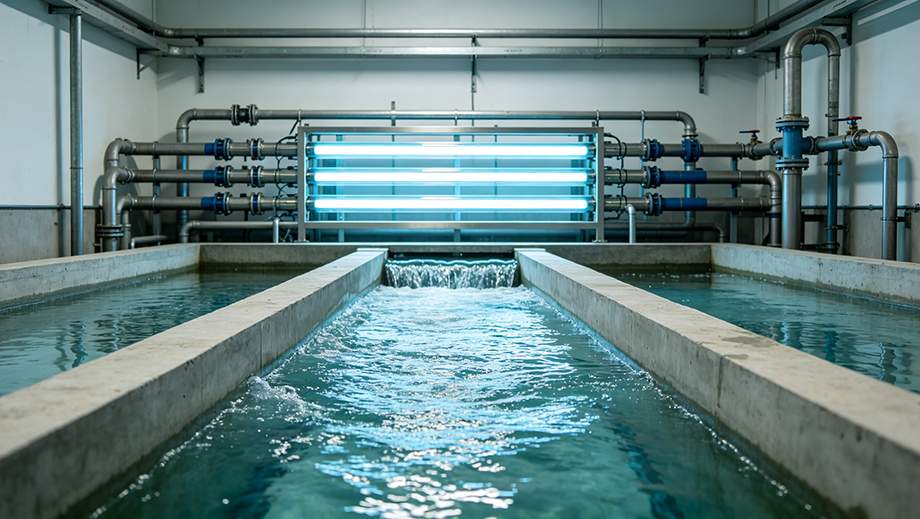
- Consider chlorine, chloramine, ozone, chlorine dioxide, or UV combinations — each has a different DBP profile.
- Monitor THMs, HAAs, and residuals continuously.
Multiple-Barrier Strategy
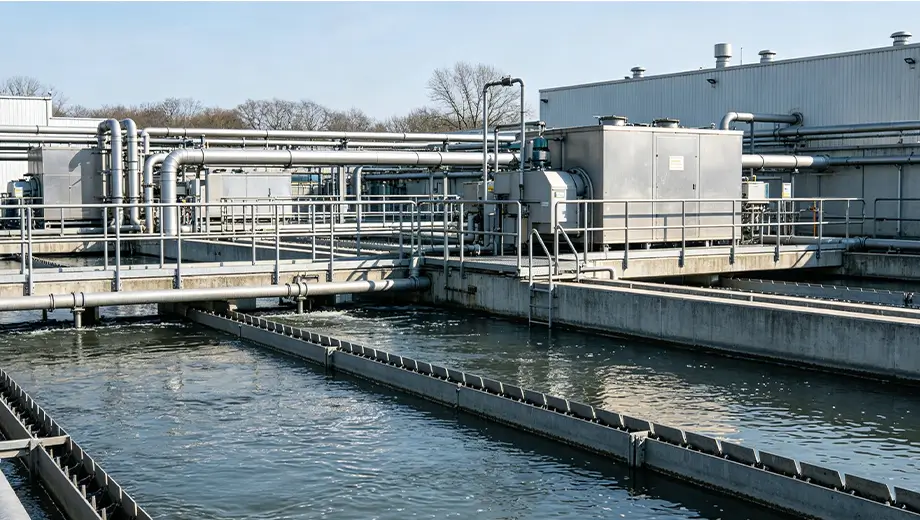
Source protection → Coagulation (PAC) → Flocculation (PAM) → Sedimentation → Filtration → GAC / O₃-BAC → Disinfection → Distribution
FAQ
What causes trihalomethanes in tap water? Chlorine reacting with natural organic matter in the source water. Lowering NOM before chlorination is the main control.
Does PAC remove NOM? PAC removes a fraction — mostly the larger, hydrophobic NOM. Smaller hydrophilic molecules need activated carbon or membranes.
Is chlorine the only disinfectant? No. Chloramine, ozone, chlorine dioxide, and UV are all used. Each creates a different set of by-products; the choice is based on source water and regulations.
Conclusion
NOM is unavoidable in surface water. The practical goal is not zero NOM but controlled NOM: remove the reactive fraction with enhanced PAC coagulation, polish with activated carbon where needed, and optimize disinfection so microbes stay dead while DBPs stay within limits.
Better Water. Better Treatment. Better Cooperation.
References:
U.S. Environmental Protection Agency (EPA) drinking water resources