Pharmaceuticals and personal care products (PPCPs)** are one of the fastest-growing water-quality concerns. They include prescription and over-the-counter drugs, hormones, fragrances, disinfectants, detergents, preservatives, and UV filters.
They are usually present at trace levels (nanograms to micrograms per liter), but they are biologically active, continuously discharged, and often resistant to conventional treatment.
What Are PPCPs?
Examples include:
- Antibiotics, analgesics, cardiovascular drugs
- Hormones and steroids
- Disinfectants, surfactants, fragrances
- Preservatives, UV filters, X-ray contrast media
Chemical properties vary wildly — some dissolve easily, some bind to particles, some biodegrade, some persist. That diversity is what makes treatment hard.
How They Enter Water
The main route is municipal wastewater: people excrete drugs and metabolites, wash personal-care products down the drain. Other sources:
- Pharmaceutical manufacturing and hospital effluent
- Livestock and aquaculture
- Landfill leachate
- Urban runoff
- Improper disposal of unused medicines
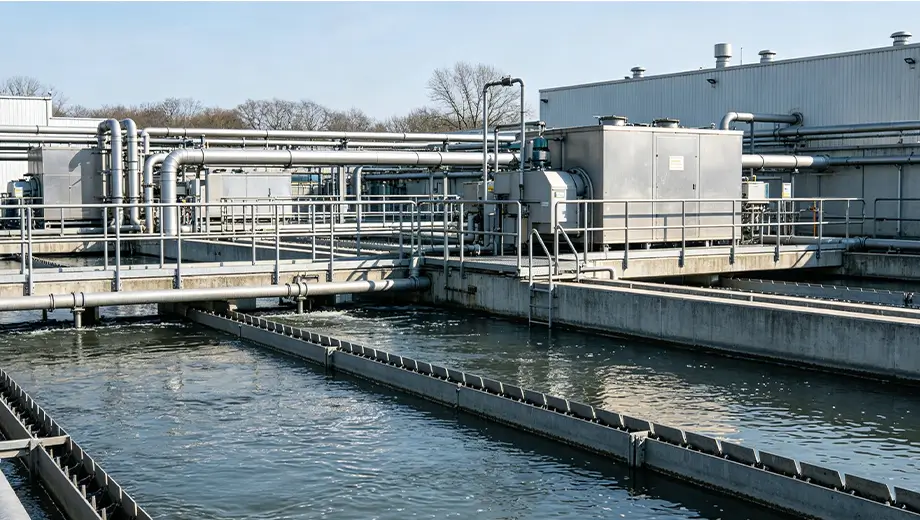
Conventional plants remove some PPCPs but not all. Residuals then flow into rivers that may later feed drinking-water intakes downstream.
Why They Matter
- Biological activity — drugs are designed to affect living systems.
- Persistence — some compounds resist biodegradation.
- Continuous discharge — every day, all year.
- Antimicrobial resistance — hospital and municipal wastewater carry resistant bacteria and genes.
- Endocrine disruption — certain compounds affect reproduction in fish.
This is not the same as saying tap water is unsafe. Risk depends on concentration, exposure, and toxicity — but it is why water utilities are upgrading treatment.
Why Conventional Treatment Often Misses Them
Conventional trains (coagulation → filtration → chlorination) are tuned for particles, turbidity, and pathogens. Many PPCPs are dissolved organic molecules that pass straight through clarification and filtration.
Coagulation removes the fraction bound to particles; biology degrades some; chlorination can transform others — but transformation is not the same as destruction. A parent drug may turn into by-products with different toxicity.
Advanced Treatment Options
- Activated carbon — powdered or granular carbon adsorbs many dissolved PPCPs.
- Ozonation — strong oxidation breaks many pharmaceutical structures.
- Advanced oxidation processes (AOPs) — ozone + H₂O₂, UV + H₂O₂, and similar combinations generate reactive radicals.
- Membranes — nanofiltration and reverse osmosis reject many dissolved compounds, at higher cost and with a concentrated reject stream to manage.
Multiple-Barrier Strategy
Because no single process catches every PPCP, plants use layers:
Source control → wastewater treatment → coagulation & flocculation → biology → activated carbon / AOPs → filtration → disinfection

Where PAC and PAM Fit
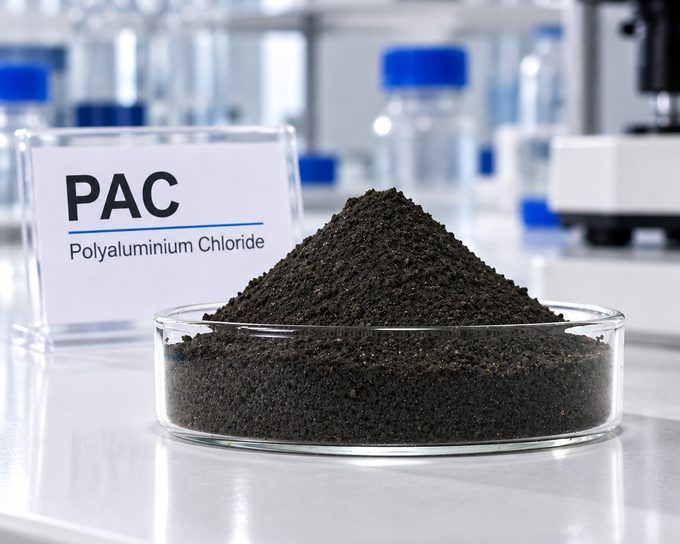
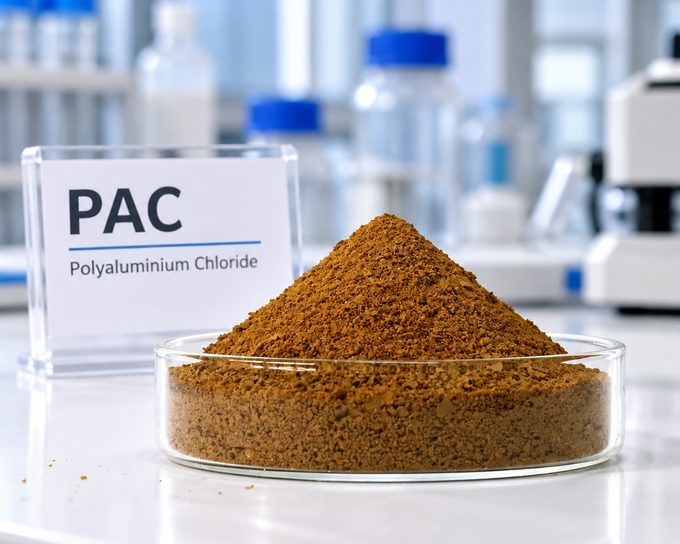
PAC (polyaluminium chloride) and PAM (polyacrylamide) are not PPCP-removal chemicals. Their role is upstream: they remove particles and particle-bound organic load, which protects downstream activated carbon and membrane processes.
Naming note: in the carbon industry, “PAC” sometimes means powdered activated carbon. In this article, PAC always means polyaluminium chloride — our product.
FAQ
Are pharmaceuticals in drinking water dangerous? Measured concentrations are usually far below therapeutic doses. Long-term, low-dose exposure and mixture effects are still being studied — hence the investment in advanced treatment.
Can chlorination remove PPCPs? Chlorine transforms many compounds, but it does not always mineralize them. Transformation products may remain and need separate assessment.
Does conventional water treatment remove PPCPs? Partially. It removes the particle-bound fraction; dissolved PPCPs need activated carbon, ozone, AOPs, or membranes.
Conclusion
PPCPs are a moving target: new compounds enter the market every year, and analytical chemistry keeps finding them at lower concentrations. The right response is a multiple-barrier plant with source control, good coagulation, and advanced polishing — not a single magic chemical.
References:
U.S. Environmental Protection Agency (EPA) drinking water resources